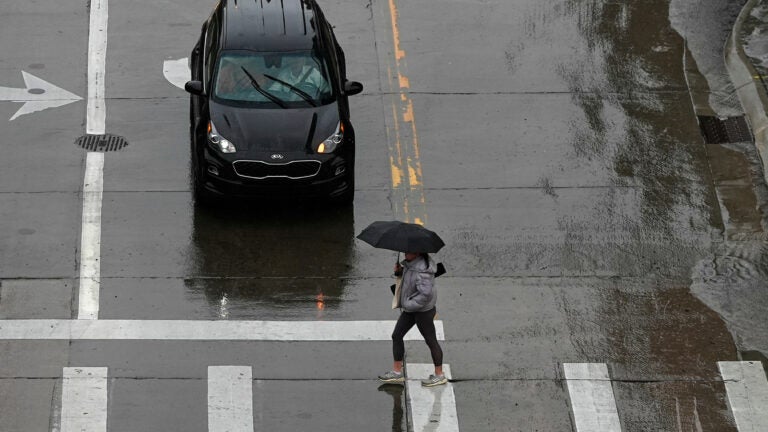
"In remarks with President Donald Trump on Thursday at the White House, Zeldin called start-stop technology the "Obama switch" and said it makes vehicles "die" at every red light and stop sign. He said the credits, which also applied to options like improved air conditioning systems, are now "over, done, finished." Zeldin repeated the generally-debunked claims that start-stop systems - which are mostly useful for city driving - are harmful to vehicles, asserting Thursday that "it kills the battery of your car without any significant benefit to the environment.""
"This latest Trump administration move to cut automotive industry efforts to clean up their cars and reduce transportation-driven emissions came as Zeldin and Trump also announced a broader repeal of the scientific finding known as endangerment that has been the central basis for regulating U.S. greenhouse gas emissions. Start-stop is a technology that automatically shuts down a vehicle's engine when a driver comes to a complete stop, and then automatically restarts the engine when the driver takes their foot off the brake pedal. Developed in response to the 1970s oil crisis, the feature was intended to cut vehicle idling, fuel consumption and emissions."
The Environmental Protection Agency ended credits for automakers that install automatic start-stop ignition systems, removing an incentive for technologies aimed at reducing idling, fuel use, and emissions. EPA Administrator Lee Zeldin labeled the feature the "Obama switch," said it makes vehicles "die" at stops, and described the credits as "over, done, finished." The administration also announced a repeal of the endangerment finding that underpins greenhouse gas regulation. Start-stop shuts down and restarts a vehicle engine at stops, originated after the 1970s oil crisis, appears on about two-thirds of vehicles, and can yield roughly 7%–26% fuel-economy improvements.
Read at Boston.com
Unable to calculate read time
Collection
[
|
...
]