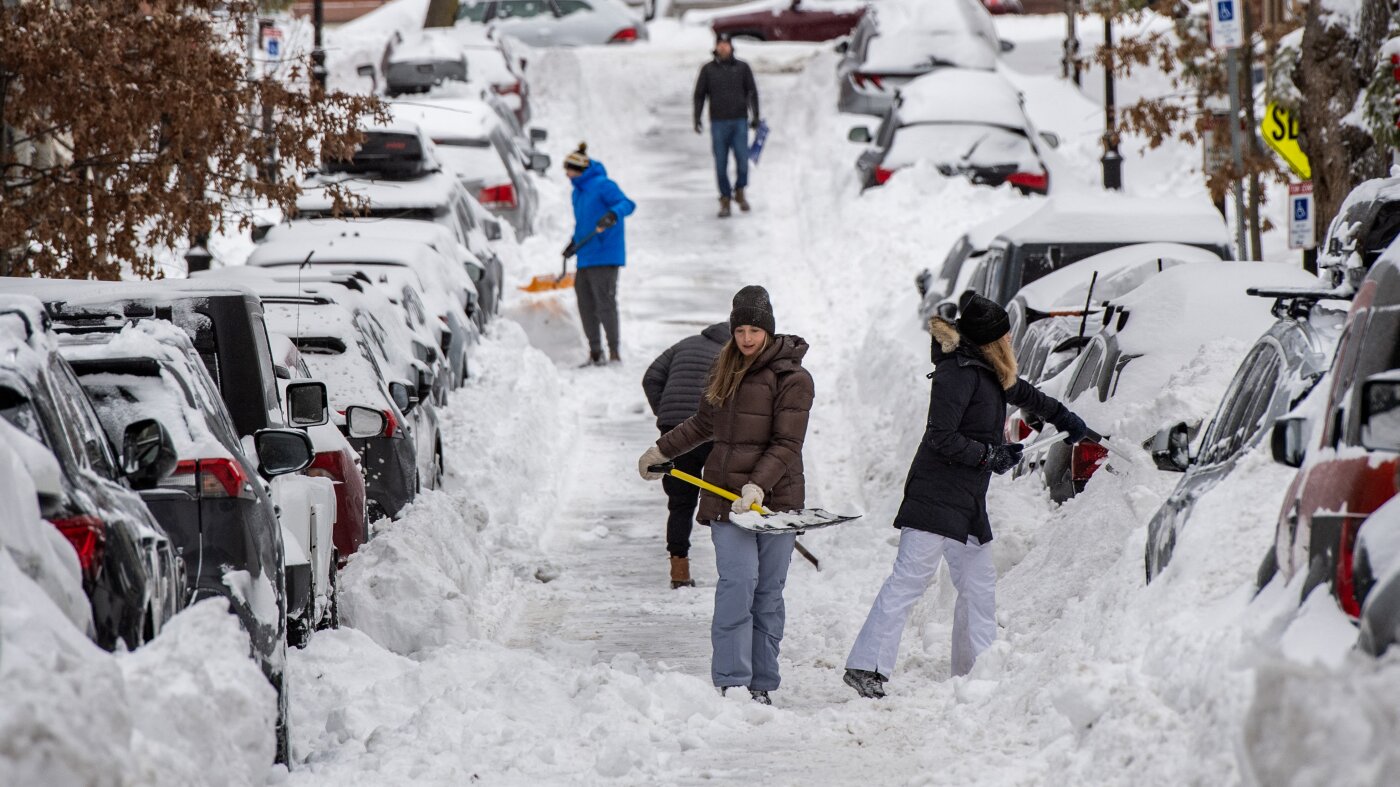
""People get so crazy because it takes so long to shovel out your car," Dahill says, so they use random items as place holders. "I've seen a Rob Gronkowski cut out, like a life-sized Rob Gronkowski. I saw the Blessed Mother, a Mary statue. You would never move that," she says. After a snowstorm last weekend dumped snow across large parts of the country, a key debate is raging on the streets:"
""If I see your chair, it's coming with me and going into the trash." Obstructing the streets or sidewalks in Baltimore is prohibited, according to the city's code. Similarly, in Chicago, the "dibs" process is illegal, according to Department of Streets and Sanitation Commissioner Cole Stallard. Stallard's department received about 2,000 complaints since November for "trash" on the street. "I have seen it all," Stallard says."
""They put their grandmother's furniture out there or we've seen kitchen tables set up like you're going to a banquet." However, in Boston, due to the fervor surrounding "space savers," the law allows the use of them for 48 hours after the end of a snow emergency, with some exceptions, according to the city's website. And while Pittsburgh doesn't have rules that govern the use of space savers, they have a proud history of "parking chairs.""
Residents frequently reserve public street parking after snowstorms by placing objects in cleared spots because shoveling takes a long time. Examples include life-sized cutouts and religious statues used as space savers. Some cities prohibit such objects as street obstructions and enforce removal; Baltimore's mayor warned that chairs placed in streets will be thrown out and the city code bans obstructing streets or sidewalks. Chicago deems the "dibs" process illegal and logged about 2,000 complaints since November for items left in streets. Boston permits space savers for 48 hours after a snow emergency, while Pittsburgh has a tradition of "parking chairs."
Read at www.npr.org
Unable to calculate read time
Collection
[
|
...
]