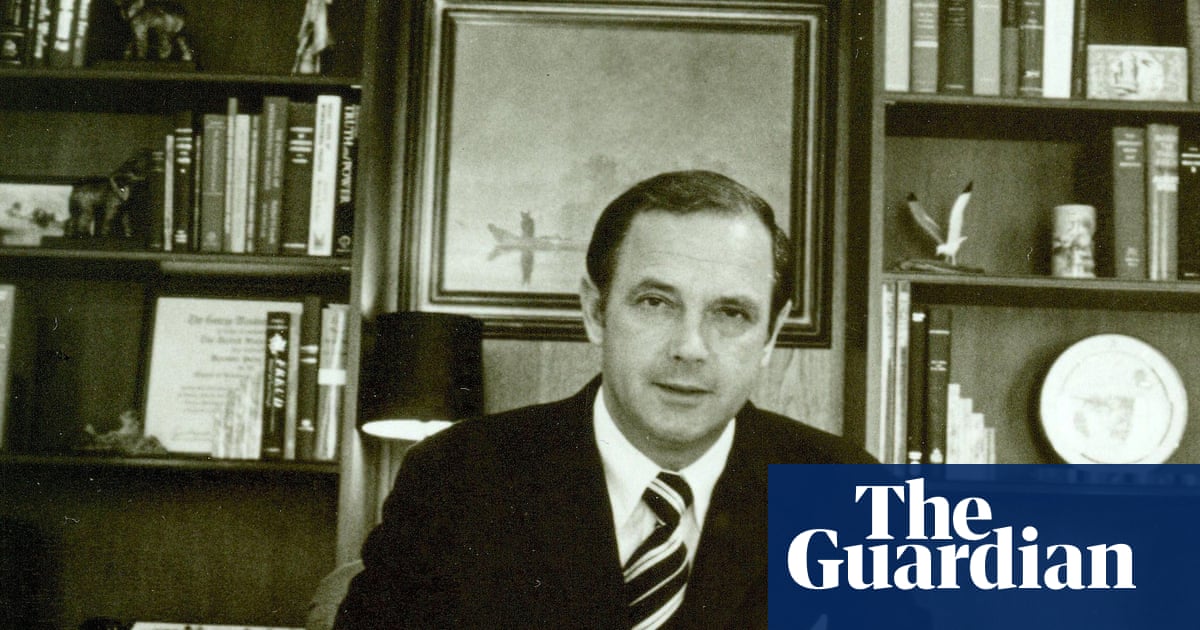
"As a deputy assistant to the president, Butterfield overseeing the taping system connected to voice-activated listening devices that had been secretly placed in four locations, including Nixon's office in the Executive Office Building and the presidential retreat at Camp David. Butterfield later said that, besides himself and the president, he believed that only White House chief of staff HR Haldeman, a Haldeman assistant and a handful of Secret Service agents knew about the taping system."
"The tapes would expose Nixon's role in the cover-up that followed the burglary in 1972 at the Democratic party headquarters at the Watergate building. To avoid impeachment by the House, Nixon resigned on 9 August 1974, less than a month after the supreme court had ordered him to surrender the relevant tapes to the Watergate special prosecutor."
"He had the heavy responsibility of revealing something he was sworn to secrecy on, which is the installation of the Nixon taping system. He stood up and told the truth."
Alexander Butterfield, a deputy assistant to President Richard Nixon, overseeing a secret taping system in the Oval Office and other locations, revealed the existence of voice-activated recording devices during Watergate investigations. His testimony under oath disclosed that Nixon routinely recorded conversations, a revelation that exposed the president's involvement in the cover-up following the 1972 Democratic National Committee headquarters burglary. The tapes, ordered released by the Supreme Court, provided evidence of Nixon's wrongdoing. Facing likely impeachment, Nixon resigned on August 9, 1974, less than a month after the court's decision. Butterfield later expressed conflicted feelings about his role in hastening the president's downfall, acknowledging the weight of breaking his oath of secrecy to tell the truth.
#watergate-scandal #nixon-resignation #secret-taping-system #presidential-accountability #whistleblowing
Read at www.theguardian.com
Unable to calculate read time
Collection
[
|
...
]