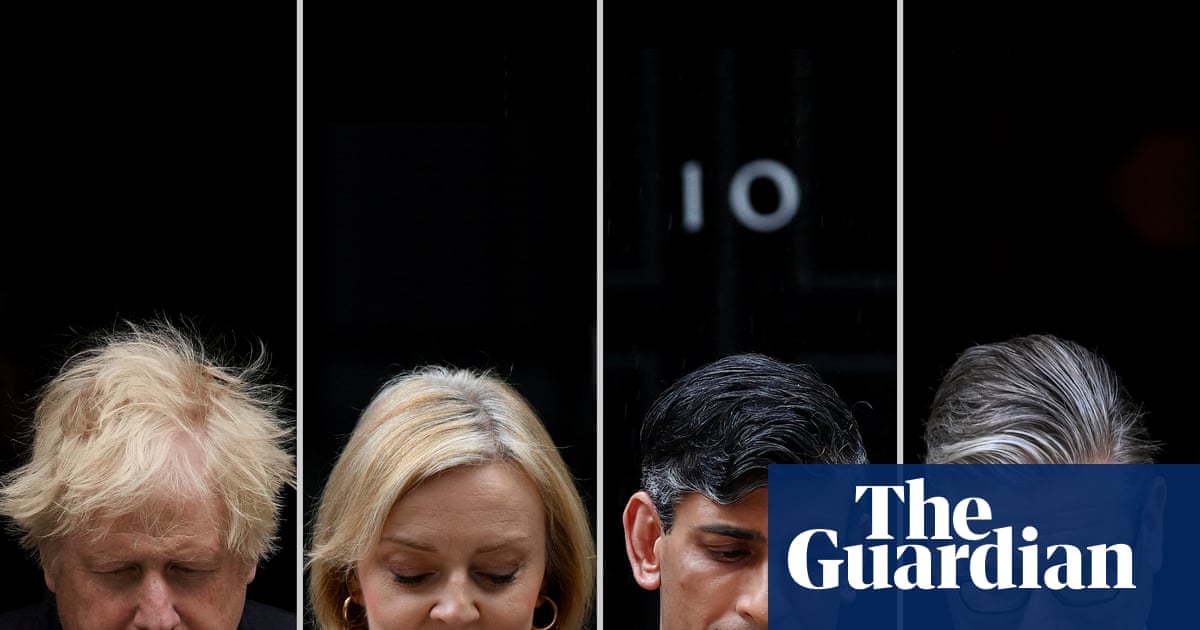
"They were times in which prime ministers seemed to be on their way out as soon as they'd arrived. The big strategic decisions the country faced were ducked or postponed. The public finances repeatedly wobbled, yet efforts to rationalise the tax system faltered in the face of vested interests, including farmers. Reforms to social security were trumpeted before being diluted. The whole business of politics was animated by rancour and rivalry, rather than practical action. All the while, populists waited in the wings."
"This is not a sneak peak into a future history book about today's Britain, but a description of the French fourth republic, which staggered after a difficult birth in 1946 until 1958, when the exhausted regime ceded the authority to create a new order to Gen Charles de Gaulle, effectively putting itself out of its misery."
"Keir Starmer is not going so gently, instead raging against the dying of the light. Overseas precedents for our political tumult are all there is, because British history can't provide them. There has never been a period like the present, said Anthony Seldon, author of The Impossible Office?, which charts the 300-year story of the premiership."
"Yes, there was a decade in each of the 18th (1760-1770) and 19th (1827-1837) centuries where we burned through prime ministers at a similar rate. But the six and soon likely seven PMs since 2016 rank as unique once we factor in the wider churn at the top. There have also been eight chancellors and nine foreign secretaries before any post-Starmer reshuffle."
Prime ministers have appeared to leave office soon after arriving, causing major national strategic decisions to be ducked or postponed. Public finances repeatedly wobble, and attempts to rationalise the tax system falter due to vested interests, including farmers. Social security reforms are announced but later diluted. Politics is driven by rancour and rivalry rather than practical action, while populists remain poised to benefit. A comparison is made to the French Fourth Republic, which struggled from 1946 to 1958 before ceding authority to Charles de Gaulle. British history is said to lack an equivalent precedent, though earlier centuries saw similar prime minister turnover. Since 2016, the rate of change at the top is presented as unique when broader churn is included.
#political-instability #prime-ministerial-turnover #public-finances-and-taxation #social-security-reform #populism
Read at www.theguardian.com
Unable to calculate read time
Collection
[
|
...
]