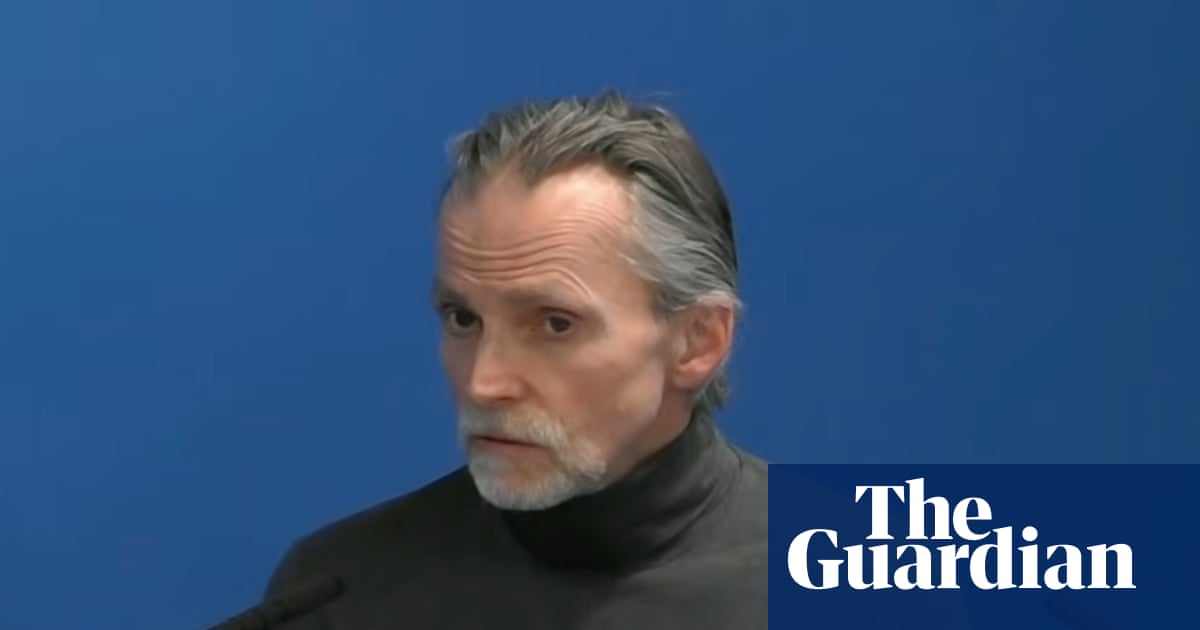
Jim Boyling infiltrated environmental and animal rights activist groups for five years and deceived three women into sexual relationships while undercover. Senior managers in the Metropolitan police Special Demonstration Squad adopted a don't ask, don't tell attitude and did not explicitly prohibit sexual relationships during deployments. Boyling said he did not consider whether the women would have consented if they had known his true identity and believed they would never discover it. He received formal letters praising his covert work from then home secretary Jack Straw and senior officers. The public inquiry is examining roughly 139 undercover officers active between 1968 and at least 2010.
"An undercover officer who deceived three women into sexual relationships said his superiors did nothing to prevent him from doing so, the spycops public inquiry has heard. Jim Boyling, who infiltrated environmental and animal rights activist groups for five years, said senior managers turned a blind eye to undercover officers having deceitful sexual relationships, often lasting years, with women. His managers adopted an attitude of don't ask, don't tell, he said. The three women have described how his betrayal devastated them."
"Boyling said he did not consider whether they would have consented to having an intimate relationship with him if they had known that in reality he was a police spy. He believed that they would never discover his true identity so it was not an issue. Boyling received formal letters praising his covert work from the then home secretary Jack Straw and senior police officers for gathering information about protesters."
"Last week, Sir John Mitting, the retired judge leading the inquiry, said the impact of the deceptive relationships on the women had become very clear in the course of the hearings I have been conducting. Boyling said the managers in his Metropolitan police unit, the Special Demonstration Squad (SDS), knew that the relationships were inevitable, but did not want to discuss the issue openly and left it up to the undercover officers to deal with them."
Read at www.theguardian.com
Unable to calculate read time
Collection
[
|
...
]