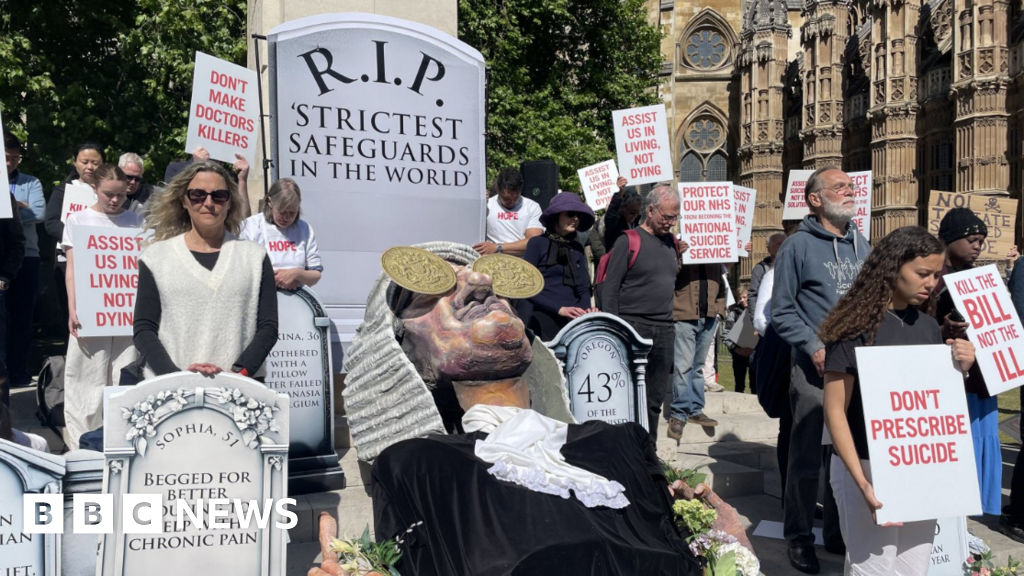
Supporters warn that the assisted dying bill is unlikely to become law this year because the House of Lords is blocking it. Lord Falconer says the bill has no hope without a fundamental change in the Lords and is threatening use of the Parliament Act to override peers if it is not passed before the King's Speech in May. Opponents argue the legislation is unsafe for vulnerable people and requires substantial amendment. A government source says many ministers now expect the Lords to reject the bill and suggests a Royal Commission could examine practical questions. Using the Parliament Act for a private member's bill would be deeply controversial.
"It is now "very, very difficult" to see how the assisted dying bill could become law this year, a leading backer of the change has told BBC News. Lord Falconer said the legislation has "absolutely no hope" of passing without a "fundamental change" in the House of Lords' approach. The former justice secretary is threatening an unprecedented use of the Parliament Act to override peers' objections if it is not passed before the King's Speech in May."
"Opponents believe the assisted dying legislation is unsafe, particularly for vulnerable people, and needs extensive amending before it could become law. A government source said many ministers now believed the bill would not pass through the Lords and hoped a compromise could be brokered. "It seems pretty clear to us now that the House of Lords is not going to pass this bill," the government source said."
"Lord Falconer insisted the Parliament Act was an "established part of our constitution" and peers should not block the bill given elected MPs had approved it. Typically bills brought by backbench MPs, called Private Members' Bills, fall unless they are passed by both the Commons and the Lords in one parliamentary session. A session ends when Parliament is prorogued, and a new one begins with a King's Speech which is expected in May."
Read at www.bbc.com
Unable to calculate read time
Collection
[
|
...
]