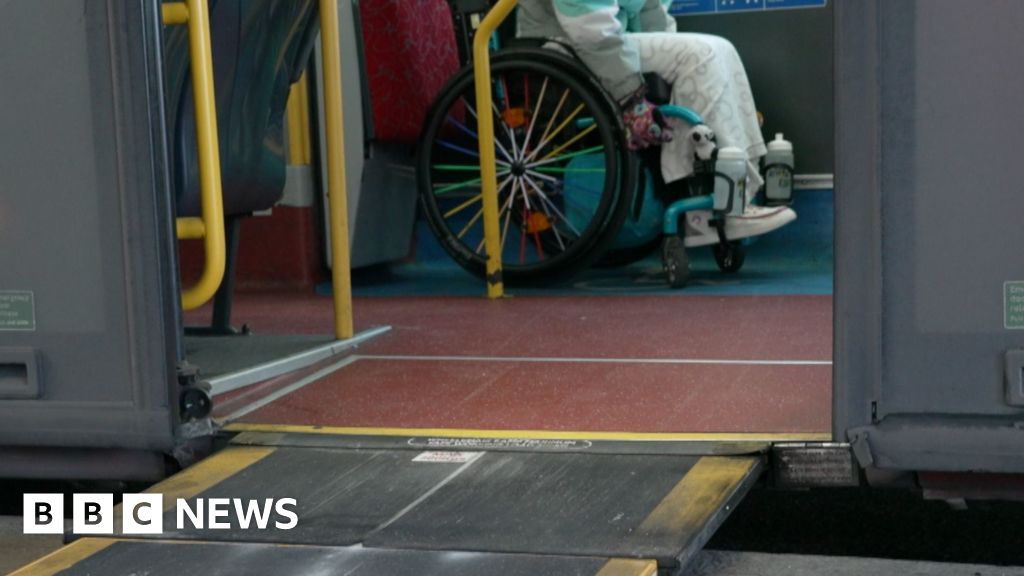
"By law wheelchair users have priority to designated wheelchair spaces, but campaigners say a lack of awareness is leaving disabled people behind. Under the Equality Act 2010, bus operators must make "reasonable adjustments" for disabled passengers. This includes making sure ramps are in working order, providing priority spaces and seats for disabled passengers, and ensuring all passengers know, or can easily find out, where they are on their journey and when to get off."
"Rosie Trew, TfL's head of bus delivery, said that while passengers can use the priority space when it is free, it is "primarily for wheelchair mobility aid users". "If someone in a wheelchair does want to get on, then they either need to share the space if possible, fold up their buggy, use the priority seating, or wait for the next service," she said."
Transport for London needs to improve awareness among customers and drivers about rules for designated wheelchair spaces. A father reported being refused boarding because a priority space was occupied by buggies, leaving his four-year-old son feeling blamed. Under the Equality Act 2010, bus operators must make reasonable adjustments including working ramps, priority spaces and seats, and clear information about where and when to get off. TfL says priority spaces are primarily for wheelchair users and suggests sharing space, folding buggies, using priority seating, or waiting for the next service. Drivers must ask non-disabled passengers to move more than once, cannot force them, should apologise if refusal occurs, and are required to report incidents before closing doors, though footage shows failures to intervene and report.
Read at www.bbc.com
Unable to calculate read time
Collection
[
|
...
]