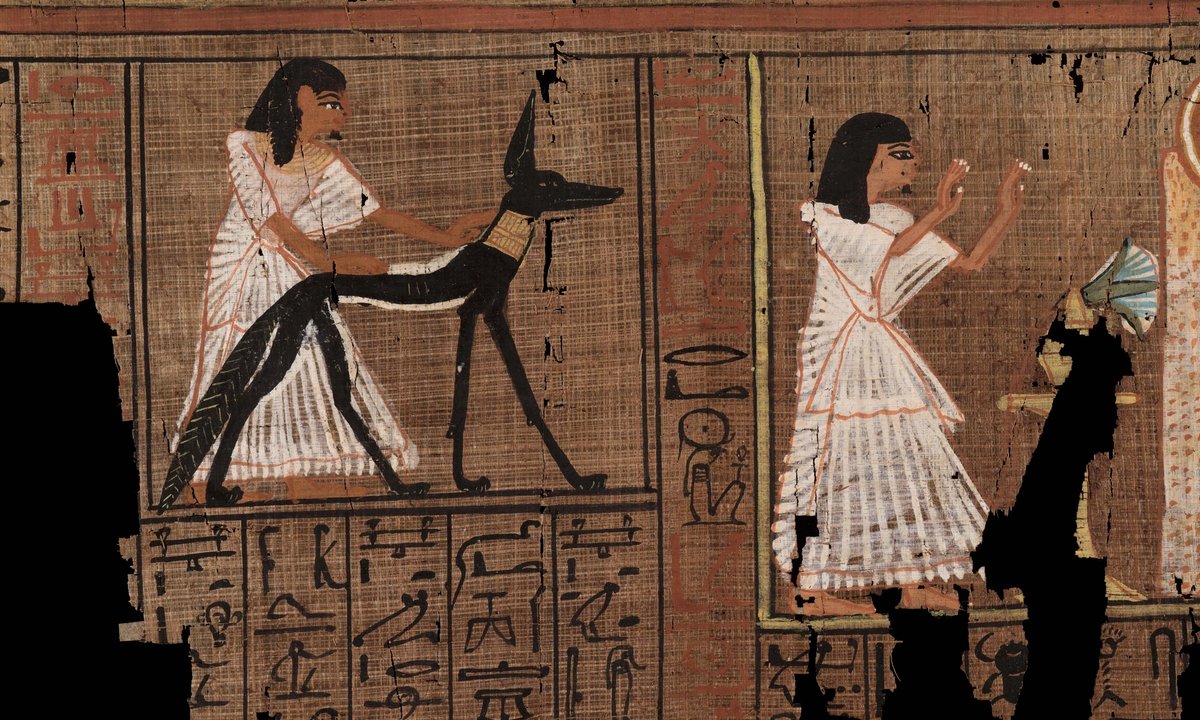
"The corrective fluid analysed using light infrared photography revealed a mixture of huntite and calcite, while images made using a 3D digital microscope show that there also are flecks of yellow orpiment, probably to make it blend in better with the fresh papyrus, which would have originally been pale cream in colour."
"The group had been studying a scene from a copy of the Book of the Dead-an anthology of magical spells placed in tombs, and believed to help the person buried there reach the afterlife, collected in the Ancient Egyptian New Kingdom- that was produced in around 1290 BC for an individual named Ramose, the supervisor of royal archives."
"Thick white lines appear on either side of the jackal's body and on the front of the thighs of its back legs, and the team had been using different analytical techniques to work out what this white paint is made of."
Researchers at the Fitzwilliam Museum discovered an ancient corrective fluid on a 3,300-year-old papyrus from the Book of the Dead, created around 1290 BC for Ramose, a royal archives supervisor. The white substance was applied to slim the figure of a jackal-headed god in a scene depicting Spell 117. Analysis using infrared photography and 3D digital microscopy revealed the fluid contained huntite and calcite, with yellow orpiment flecks added to blend with the papyrus's original pale cream color. This differs from the white paint used elsewhere on the document, indicating deliberate editorial choices by ancient craftspeople.
#ancient-egyptian-craftsmanship #papyrus-conservation #book-of-the-dead #manuscript-editing-techniques #archaeological-analysis
Read at The Art Newspaper - International art news and events
Unable to calculate read time
Collection
[
|
...
]