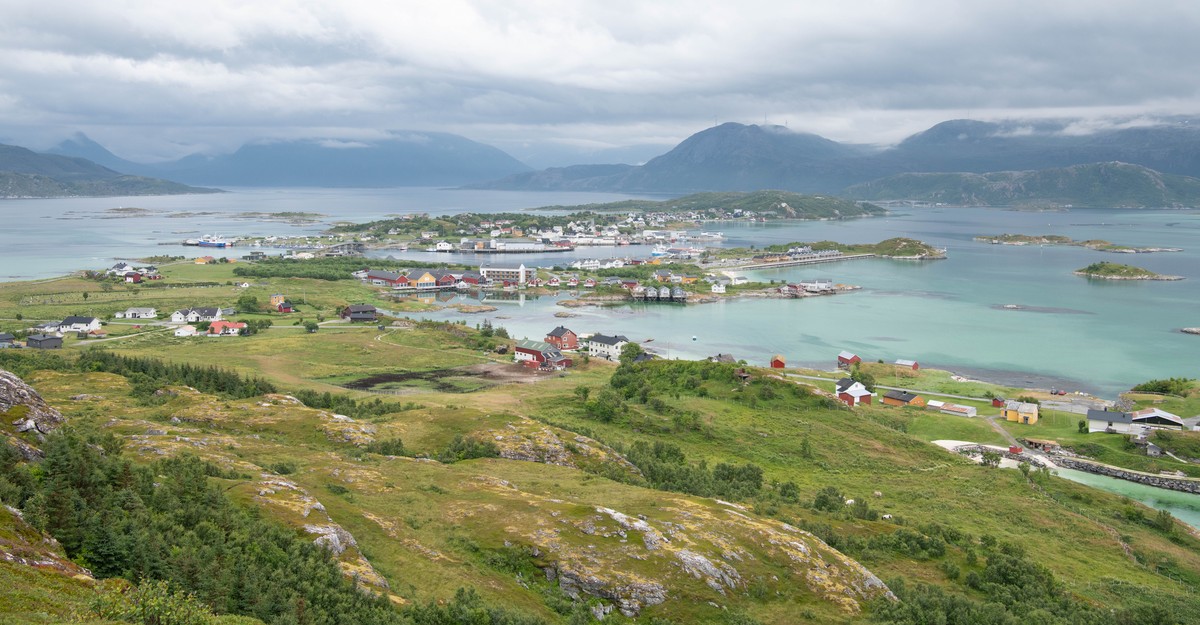
"In the winter, the island is covered in snow. But during the midnight sun, the weather is temperate, even hot. Purple wildflowers stick out of mossy grass, and the electric-blue water and white sand look more Caribbean than Arctic. Walking along the coast around 11 p.m., you might see kayakers paddling on the smooth sea in the distance, or children in pajamas fishing and running along the beach with their catches."
"Inspired by the extreme periods of light and dark, in late spring 2019, a group of locals signed a petition to make the village the first "time-free zone," a place where anyone could buy groceries, cut grass, or eat dinner no matter the time. Their reasoning made sense enough: In a town where the sun shines at 1 a.m. in July and you can see the stars at 1 p.m. in December, the time on the clock is meaningless."
Sommarøy lies above the Arctic Circle and experiences continuous daylight from May 18 to July 26 and continuous night from November until January. Winter covers the island in snow, while the midnight-sun period brings temperate to hot weather, purple wildflowers, electric-blue water, and white sand. In late spring 2019, locals petitioned to declare Sommarøy a "time-free zone" so activities could occur regardless of clock time, arguing that conventional hours feel meaningless when the sun shines at 1 a.m. in July and stars can be seen at 1 p.m. in December. Some shops and services still maintain set hours, though daily life often follows the natural light cycle.
Read at The Atlantic
Unable to calculate read time
Collection
[
|
...
]