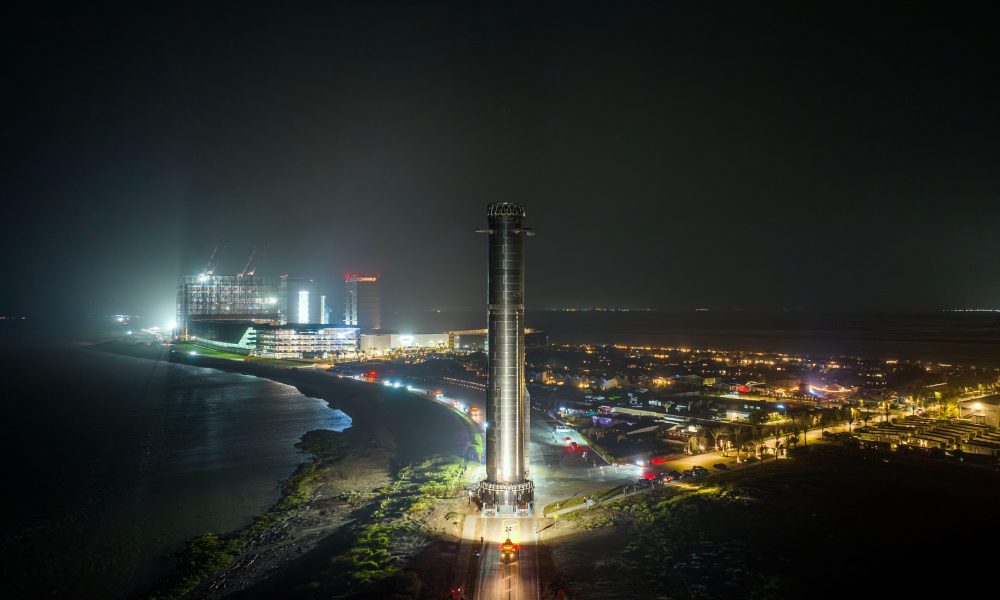
SpaceX delayed the planned first test launch of Starship’s v3 rocket after a minor hydraulic issue prevented the launch tower arm from retracting properly. The company scrubbed the upgraded Starship v3 flight in the final minutes of the countdown on May 21. Elon Musk stated that a hydraulic pin on the tower’s “chopsticks” arm failed to retract, and SpaceX planned to fix the problem overnight. Teams began troubleshooting the hydraulic system immediately. A new launch attempt is scheduled for tomorrow night at 5:30 p.m. CT, 6:30 p.m. ET, and 3:30 p.m. PT. Starship v3 includes upgrades such as increased propellant capacity, Raptor 3 engines, larger grid fins, improved heat shielding, and an enhanced fuel transfer system.
"SpaceX has decided to stand down from what was supposed to be the first test launch of Starship's v3 rocket tonight after a minor issue with a hydraulic pin delayed the flight once more. The company scrubbed its first test flight of the upgraded Starship v3 on May 21 in the final minutes of the countdown. SpaceX CEO Elon Musk quickly took to social media platform X, explaining that a hydraulic pin on the launch tower's "chopsticks" arm failed to retract properly."
"Musk added that the company would fix the issue this evening. SpaceX will attempt another launch tomorrow night at 5:30 p.m. CT, 6:30 p.m. ET, and 3:30 p.m. PT. The hydraulic pin holding the tower arm in place did not retract. If that can be fixed tonight, there will be another launch attempt tomorrow at 5:30 CT."
"The countdown for Starship Flight 12 - featuring the taller and more capable V3 stack with Booster 19 and Ship 39 - had been progressing smoothly until the late-stage issue surfaced. The Mechazilla tower arm, designed to secure the vehicle on the pad and eventually catch returning boosters, could not complete its retraction sequence. SpaceX teams immediately began troubleshooting the hydraulic system for an overnight repair."
"Starship V3 introduces several significant upgrades over earlier versions. These include greater propellant capacity, more powerful Raptor 3 engines, larger grid fins, enhanced heat shielding, and an improved fuel transfer system. The changes are intended to increase payload performance, support higher flight rates, and advance the vehicle toward operational missions, including Starlink deployments, NASA Artemis lunar landings, and future crewed Mars flights."
Read at TESLARATI
Unable to calculate read time
Collection
[
|
...
]