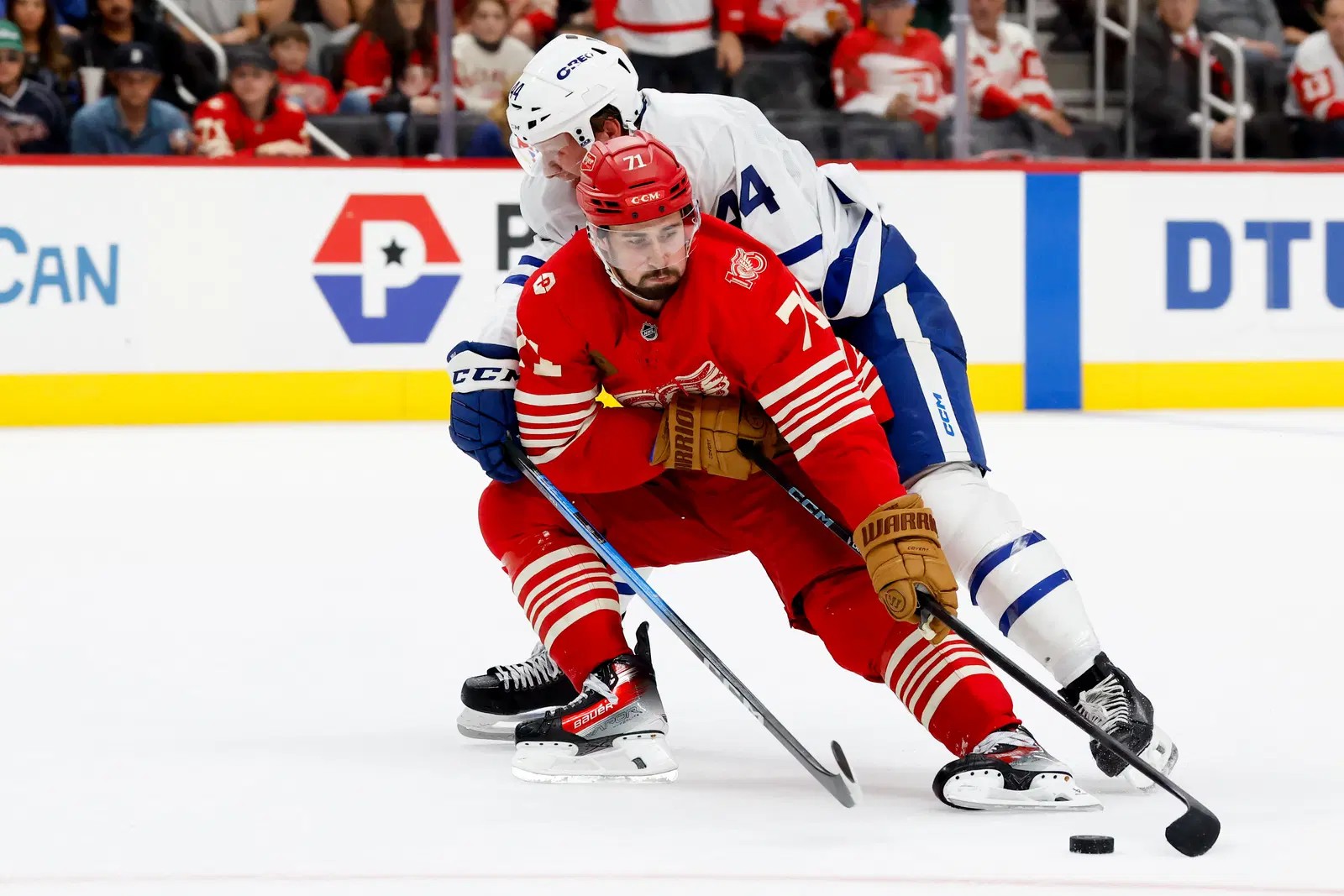
"After a bit of a jittery first minute or two, the Leafs were mostly breaking out well at five-on-five, using the middle of the ice more and going off the wall less, as they've done a better job of in the last handful of games. They generated extended offensive-zone shifts, particularly via their Dakota Joshua-Nic Roy-Nick Robertson line, and held a notable advantage in offensive-zone time and a lead in high-danger scoring chances."
"Their power play looked more fluid and dynamic, getting pucks into the middle more, with Auston Matthews taking charge of his unit on both power-play opportunities in the second period. They scored one power play goal via Matthew Knies on their first opportunity - set up by Matthews - and could've scored another on their second chance, with Matthews firing four shot attempts on the second opportunity."
"Coming off the second power play, the Roy line generated a good offensive-zone shift, and Matthews nearly scored on a sort of Ovechkin-goal-vs-Phoenix-like attempt that would've qualified for the Mount Rushmore of memorable Matthews goals if Cam Talbot hadn't come up with the save. They needed some insurance, but the game felt in a good spot from the Toronto perspective."
The Maple Leafs played well through 35 minutes, breaking out effectively at five-on-five, using the middle of the ice more and generating extended offensive-zone shifts. The Dakota Joshua–Nic Roy–Nick Robertson line created consistent pressure, and Toronto held an advantage in offensive-zone time and high-danger chances. The power play looked fluid with Auston Matthews directing both second-period opportunities, producing a Matthew Knies goal and multiple close attempts. Matthews nearly scored on a highlight-reel chance saved by Cam Talbot. Detroit raised its urgency late in the second period, and Toronto's turnovers—including plays by Max Domi—and inability to break the Red Wings' cycle led to a tying goal.
Read at Maple Leafs Hotstove
Unable to calculate read time
Collection
[
|
...
]