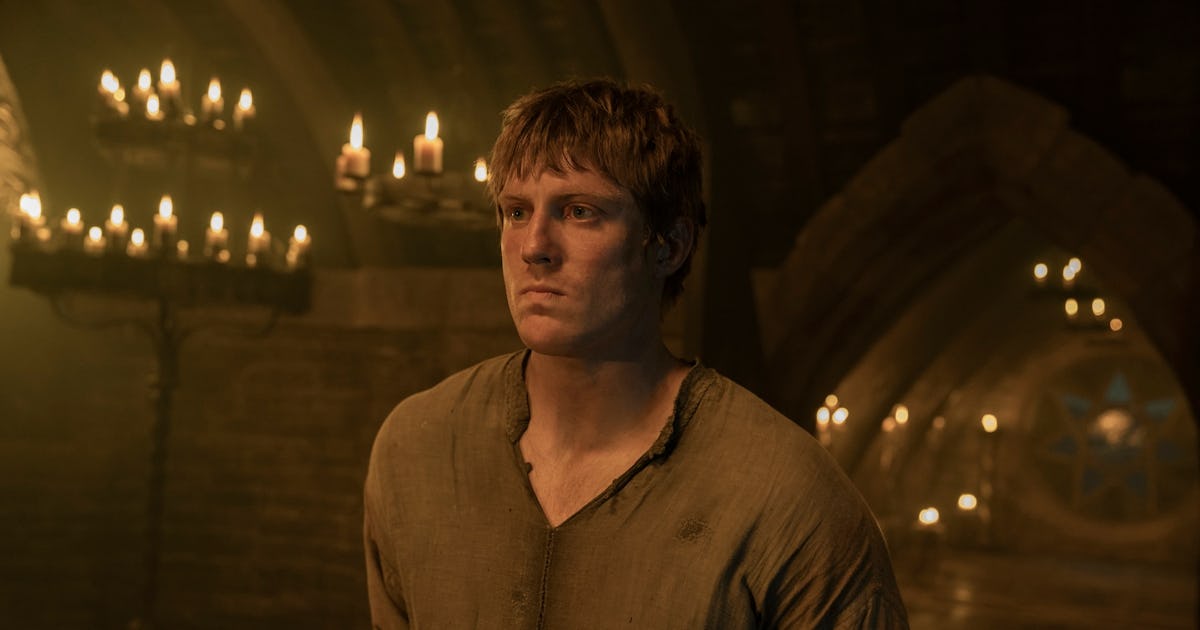
"In the Game of Thrones universe, law and order is often left to the gods through a trial by combat. The thought is, whoever is in the right will be destined to win by the Seven Gods. That's the thought process that led to Tyrion's defense by Bronn at the Vale and Oberyn Martell's eye-popping loss against The Mountain in Game of Thrones."
"Ser Duncan the Tall is forced to face a trial for (rightfully) attacking Aerion Targaryen at the end of Episode 4. Knowing he could stand a chance at defending himself against Aerion, Dunk requests a trial by combat, as is his right. Aerion initially refuses, but after his father Maekar tells him he can't refuse, he responds by requesting a "trial of seven" - something so obscure, even Maekar has no idea what it is."
"It's up to Baelor to explain what it is. "It is another form of trial by combat," he says. "Ancient. Seldom invoked. It came across the narrow sea with the Andals and their seven gods." Dunk isn't exactly educated on the nitty-gritty parts of the Old Gods, so he asks for more information. "The Andals believed that if the seven champions fought, the gods, being thus honored, would be more like to intervene and see the guilty party punished," Baelor says."
Law and order often relies on the gods through trial by combat, where the righteous are believed to be destined to win. That belief explains Tyrion's defense by Bronn and Oberyn Martell's loss to the Mountain. In A Knight of the Seven Kingdoms Episode 4, Ser Duncan the Tall attacked Aerion Targaryen and requested a trial by combat. Aerion refused then invoked a "trial of seven," an ancient Andal form of trial by combat. Baelor explains that the Andals believed seven champions honoring the gods would increase divine intervention. A trial of seven is a seven-on-seven battle, shifting precedent and foreshadowing a bloody confrontation.
Read at Inverse
Unable to calculate read time
Collection
[
|
...
]