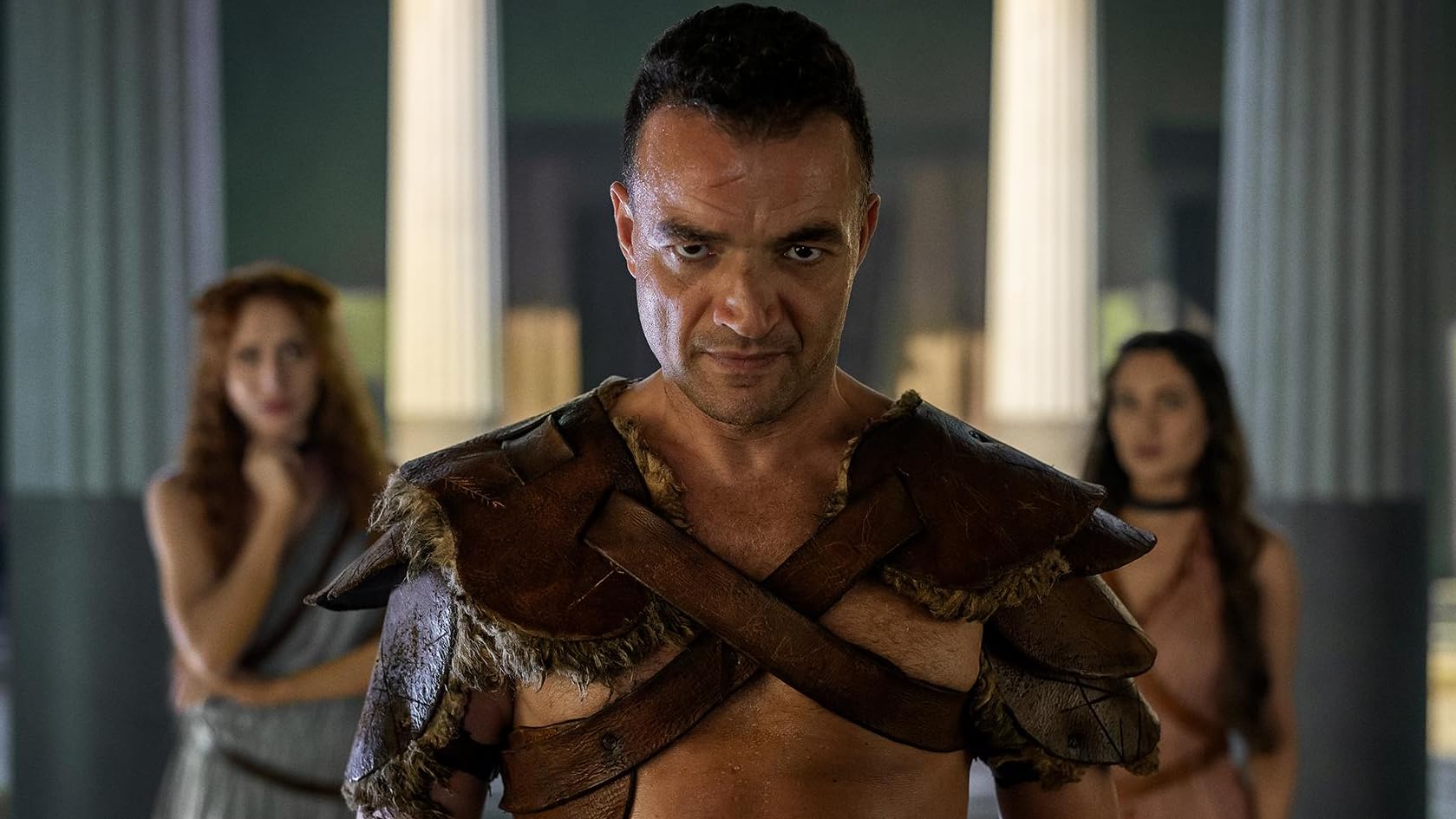
Ashur survives the Battle of Mount Vesuvius and becomes instrumental in the rebellion's collapse. He delivers the fatal blow to Spartacus and rises from slave to run the same ludus that once owned him, overseeing his own gladiators. Ashur faces contempt from Capua's wealthy and frustration at underperforming fighters while desperate to forge a new legacy. After his top gladiator dies, Ashur takes in Achillia, who fought off three Roman soldiers while shackled. Ashur demands she train with his gladiators, but her presence provokes apathy, mockery, and violent attempts from the men rather than admiration.
"In this universe, Ashur not only survives the Battle of Mount Vesuvius but also becomes an integral figure in the rebellion's collapse. In a shocking blow, it's revealed that Ashur not only aided in Spartacus' (Andy Whitfield, Liam McIntyre) demise, but he himself landed the final blow that led to the man's death. Because of this, our new leading man is no longer a slave and has instead found himself running the same ludus that once owned him, now overseeing his own group of gladiators."
"After his most promising gladiator is killed in the arena, a woman named Achillia (Tenika Davis) catches Ashur's eye after she fights off three Roman soldiers while shackled in chains. Seeing great promise in her and desperate to make a mark in the arena, he takes her in and demands that she be trained with his gladiators. Yet the woman's presence within the ludus ignites not passion in the men, but apathy."
"Unlike many prequels or sequels, "Spartacus: The House of Ashur" takes place in an alternate future where the titular character (played by Nick E. Tarabay) survived instead of meeting his demise in Season 2. It's a strange premise, but with nearly every single character in the original show dying by its final season, taking liberties like this is the only way for this property to continue."
Read at Roger Ebert
Unable to calculate read time
Collection
[
|
...
]