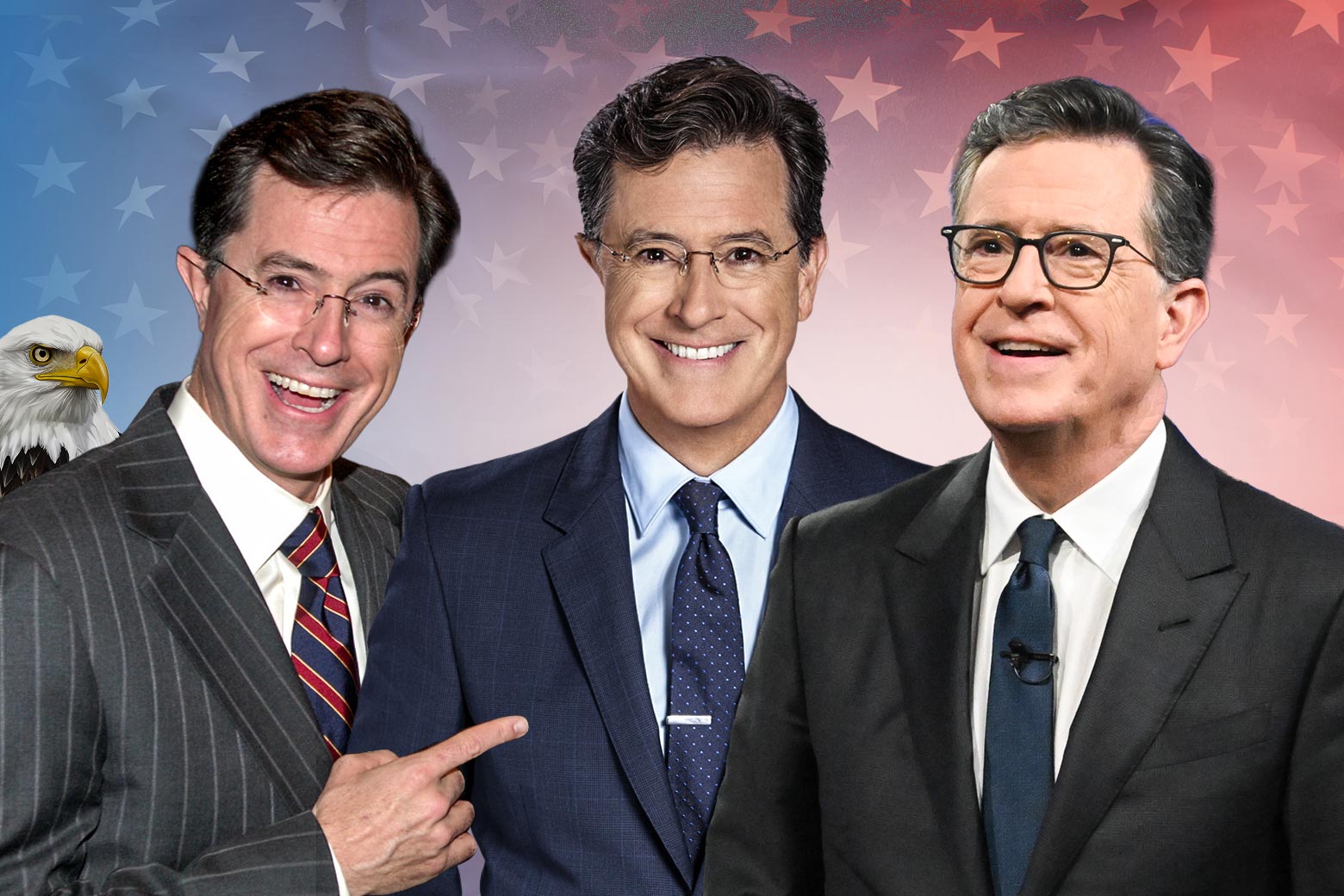
Stephen Colbert accepted an Emmy by looking back at the show’s origins and realizing it had evolved from a late-night comedy about love into one about loss. The program still delivered topical jokes, celebrity anecdotes, and final cameos, but Colbert’s approach changed over time. After election night 2016, a live commercial-free special revealed that prewritten material no longer fit the audience’s mood, and the last minutes felt honest. That moment became a turning point. Colbert did not aim to reinvent the format, but he brought sincerity to the time slot, making it a newly valued quality for late-night hosting.
"When Stephen Colbert accepted The Late Show's Emmy for best talk show last fall-its first, after a decade on the air-he thought all the way back to its beginnings, when he set out do to " a late-night comedy show about love." Over the years, especially after a critical juncture he felt no need to elaborate on, he realized that he and his staff were, in some ways, making "a late-night comedy show about loss." Love and loss aren't usually the domain of the late-night talk show, but as Colbert told the audience, both in the Ed Sullivan Theater and at home, at the start of his final episode, this was never just a talk show to him. It was a "joy machine.""
"Colbert's hour on CBS was, like all the others, a venue for topical comedy bits and pre-screened celebrity anecdotes; right down to the wire, he was still cracking jokes about Staten Island and squeezing in a few last cameos. But though he began his broadcast tenure trying to distance himself from the political performance art of The Colbert Report, a shift in the winds made it impossible to stay that course. On election night 2016, Colbert realized in the middle of a live, commercial-free special that the vote was not going as they'd expected it to, and not only was most of their prewritten material worthless, but the audience was no longer in the mood to laugh."
""The last 10 minutes of that election show were honest," he reflected the following year, "and that was a turning point for us." Unlike David Letterman, whose chair he took over in the fall of 2015-the same chair, at least figuratively, that he and Letterman hurled from the Ed Sullivan's roof last week-Colbert didn't set out to reinvent the format, let alone turn it inside out the way his metafictional Comedy Central persona did. But he brought something to the time slot that, while never much prized before 2016, became an abruptly desirable quality in a late-night host: sincerity."
Read at Slate Magazine
Unable to calculate read time
Collection
[
|
...
]