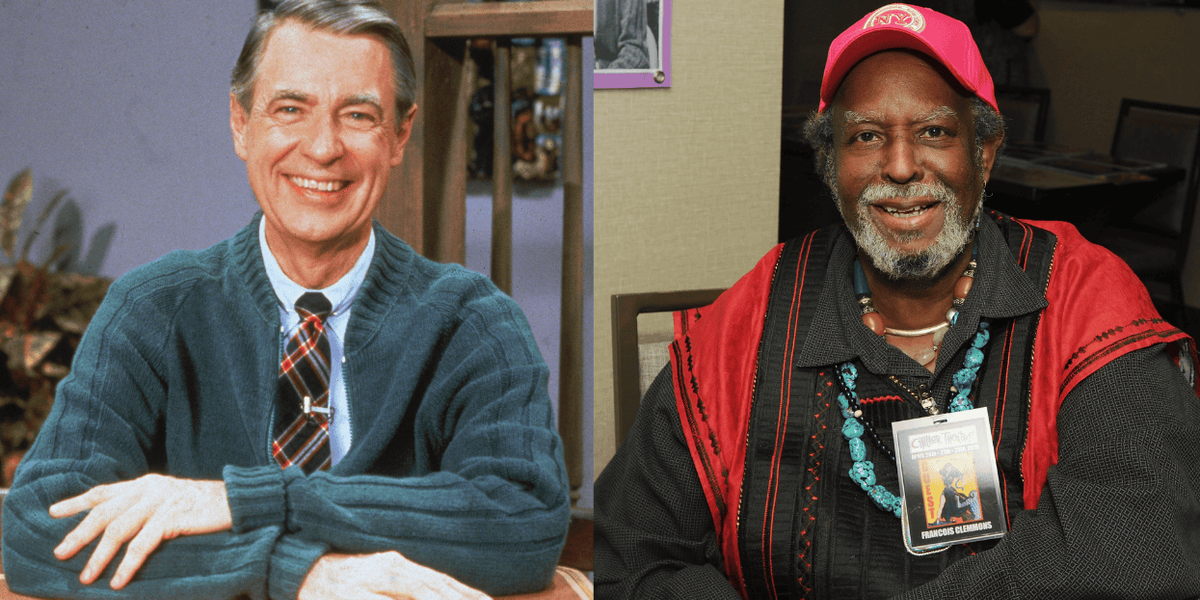
"I have watched Mister Rogers' Neighborhood at several points in my life, well past the target age range of two to five years old. Mr. Rogers is a virtual companion to millions in childhood and beyond, speaking the words of love and acceptance we all long to hear through gentle teachings that serve up the ABCs of compassion and empathy. He encourages curiosity and is willing to go all in, even when he sometimes looks silly. Silly is a marker of triumph in his neighborhood. We would all do well to watch Mister Rogers for valuable life lessons."
"A few years ago, I watched a documentary about Fred Rogers. François Clemmons, a Black man known as Officer Clemmons on the television show, was interviewed about a famous scene in which Mr. Rogers invites Officer Clemmons to take off his shoes and socks and join him, their feet soaking together in the cool water of a children's plastic swimming pool on a hot summer day. A black man sitting next to a white man soaking their feet in the same water in 1969 was a clear commentary on racism and segregation. At the time, it was revolutionary."
"François has also told the story of being a gay man in the 1960's in Pittsburgh. Fred, his boss, advised François that he could not be seen at a gay bar or be publicly known as a gay man and continue to be on the children's television show because the social stigma would jeopardize the future of the show. François also reported that Fred encouraged him to marry, thereby straightening out his life and image."
Mister Rogers' Neighborhood reached audiences beyond its toddler target by modeling love, acceptance, curiosity, and playful vulnerability. A notable 1969 scene showed Fred Rogers and Black cast member François Clemmons soaking their feet together, symbolically challenging segregation. Clemmons later recounted pressures from Rogers in the 1960s to avoid public association with gay venues and to conceal his sexuality to protect the show's future. Rogers reportedly encouraged Clemmons to marry to preserve his public image. That counsel caused shock and raised questions about the tension between public advocacy for acceptance and private decisions influenced by social stigma. Clemmons later clarified he did not view the counsel as a personal rejection.
Read at Advocate.com
Unable to calculate read time
Collection
[
|
...
]