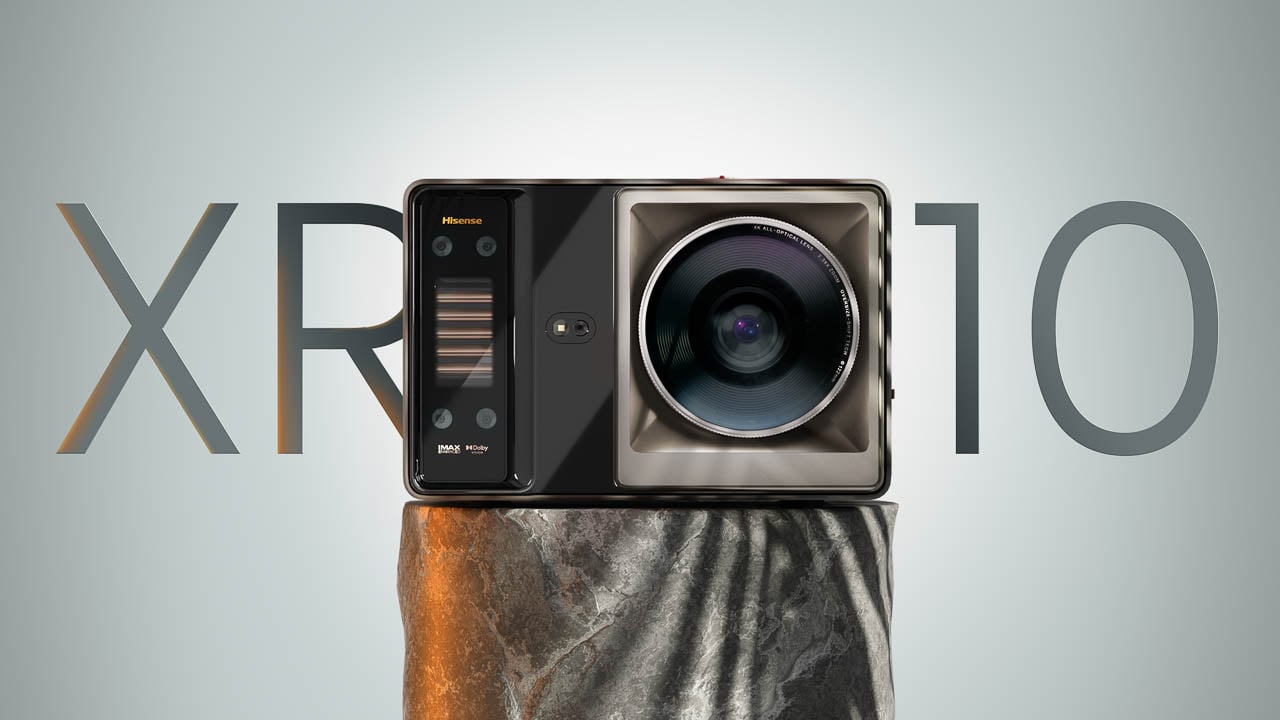
"Large-format displays have always posed a spatial question that brightness alone cannot answer: how much permanence does a room owe to its screen? The Hisense 100U8QG, reviewed earlier this year, represented one answer. At 100 diagonal inches of Mini-LED panel, it demanded architectural consideration. Wall reinforcement, viewing distance calculations, furniture subordination. The display became a fixture in the truest sense, its physical presence reshaping the room around it."
"Projection operates under different constraints. The XR10 can scale from 65 to 300 inches depending on throw distance and surface availability. This variability represents more than convenience. It represents a fundamentally reversible intervention. The wall remains a wall. The room retains its capacity to be something other than a viewing space. When the projector powers down, the architecture reasserts itself in ways that a mounted 100-inch panel never permits."
Large-format displays pose a spatial question that brightness alone cannot answer: how much permanence does a room owe to its screen. A 100-inch Mini-LED panel demands architectural consideration—wall reinforcement, viewing-distance calculations, and furniture subordination—and becomes a fixture that reshapes the room. The XR10 Laser TV offers a contrasting approach: projection can scale from 65 to 300 inches and functions as a reversible intervention. When the projector powers down the wall reasserts itself, preserving a room's capacity for multiple uses such as morning windows, evening entertainment, or hung artwork. Fixed ultra-large displays foreclose these possibilities; projection preserves spatial flexibility.
Read at Yanko Design - Modern Industrial Design News
Unable to calculate read time
Collection
[
|
...
]