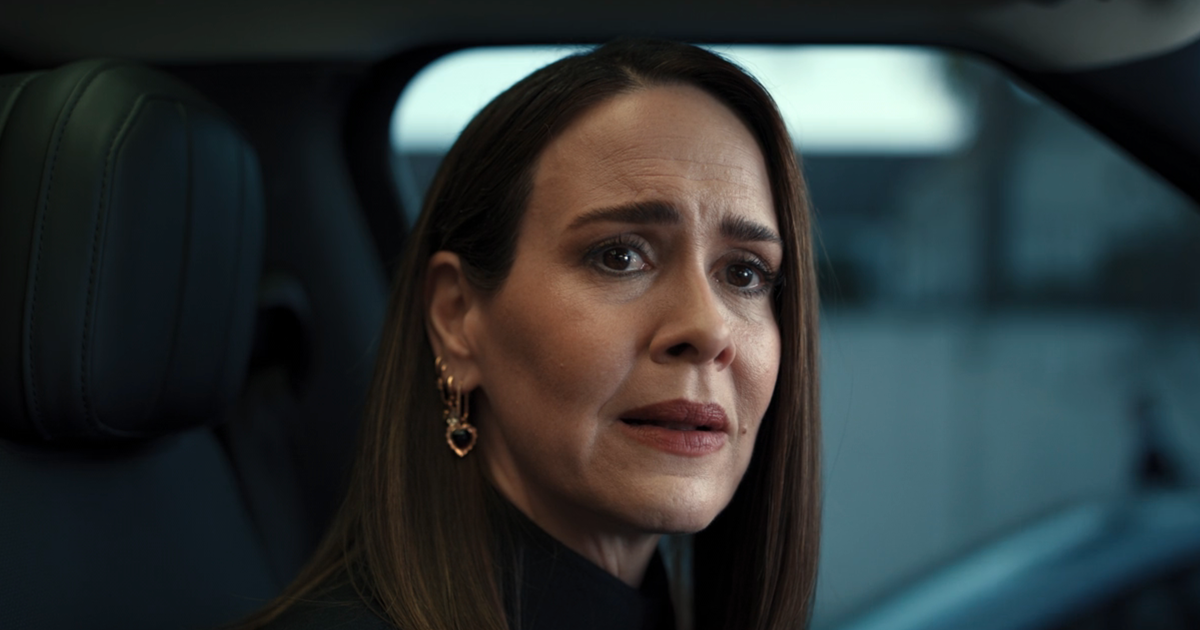
"Hulu should start selling Carrington Lane action figures and posters. There should be a balloon of Carrington Lane in the Macy's Thanksgiving Day Parade. Streets should be named after her - just picture Carrington Lane Lane. Statues should be erected in her honor in every park in the country, both public and private. Carrington Lane is mother, this we've already established."
"Something else that eats away at her, we find out, is her estranged relationship with her daughter's father - Sebastian, a gay friend whom she seems to have done a reverse The New Normal with, but without the involvement of Nene Leakes. So when a photo of the three of them pops up on her phone during an important meeting, she can't help but start crying. She's called out by her client and quits before she can get fired."
"She meets with him at his luxurious house (something Davina from Selling Sunset would spend at least three seasons trying to sell) to make sure he doesn't have any other skeletons in his closet. But the more they chat over wine, and the more she negs him and his greasy man bun, the more oddly sensual things become. This show seems to think that if they light enough fireplaces, any two characters could feasibly have sex - and they're right."
Carrington Lane is portrayed as an object of exaggerated adulation, with fantasies of mass merchandising, public monuments, and ubiquitous recognition. She is a mother to a preteen daughter, Amabel, who shares her haircut and suffers social ostracism, exacerbating Carrington's anxieties. Carrington's estranged relationship with Amabel's father, Sebastian, resurfaces when a family photo appears during a meeting, prompting tears and the loss of a client. A divorce lawyer intervenes and offers contact information. Carrington pursues a client, Chase, whose flirtation escalates into a sensual encounter that references Out of Africa and critiques the show's heavy-handed sexual stylings.
Read at Vulture
Unable to calculate read time
Collection
[
|
...
]