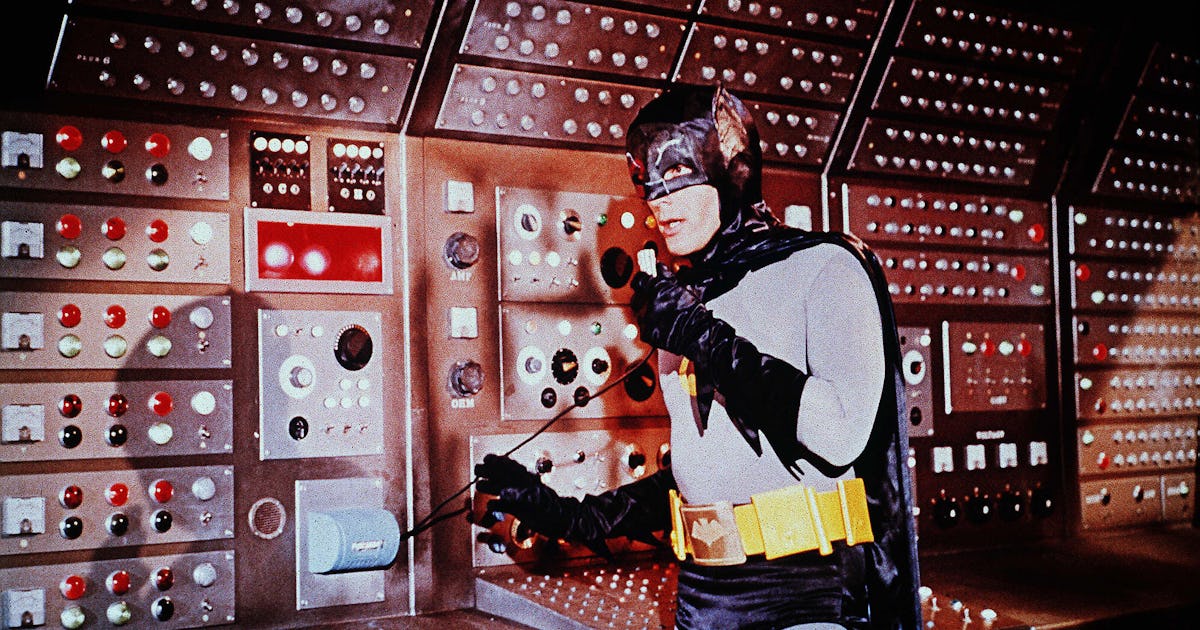
"In the 21st century, superhero stories are often judged on how realistic they are - how "gritty," how dark, how "adult." It's never been more visible than with Batman. Between Christopher Nolan's take in the Dark Knight trilogy and the still-ongoing takes by Matt Reeves, it seems like the Caped Crusader was built for the Nirvana-scored, brooding tone of tragic flashbacks and smeared eyeliner."
"Batman premiered on television in 1966 and hit the ground running with an episode where Batman (Adam West) and Robin (Burt Ward) face off against The Riddler (Frank Gorshin). That set the standard for the series: every week, the dynamic duo would face off against a "Special Guest Villain" ranging from the iconic, like Julie Newmar or Eartha Kitt as Catwoman, to the obscure, like Ethel Merman as "Lola Lasagne.""
21st-century superhero stories often emphasize gritty realism, with Batman portrayed as brooding and tragic in modern film interpretations. The 1960s Batman television series instead leaned into comic-book camp, presenting Bruce Wayne as an explicit comic-book character rather than aiming for psychological realism. Episodes relied on gimmicks, low-budget staging, bat-gadgets, abandoned-factory schemes, horizontal building-climbs, and choreographed fights punctuated with onomatopoeic title cards and cliffhangers. Adam West's deadpan delivery and playful choreography like the "Batusi" amplified the show's charm. A rotating roster of Old Hollywood guest stars contributed to the series' lively, reliable entertainment.
Read at Inverse
Unable to calculate read time
Collection
[
|
...
]