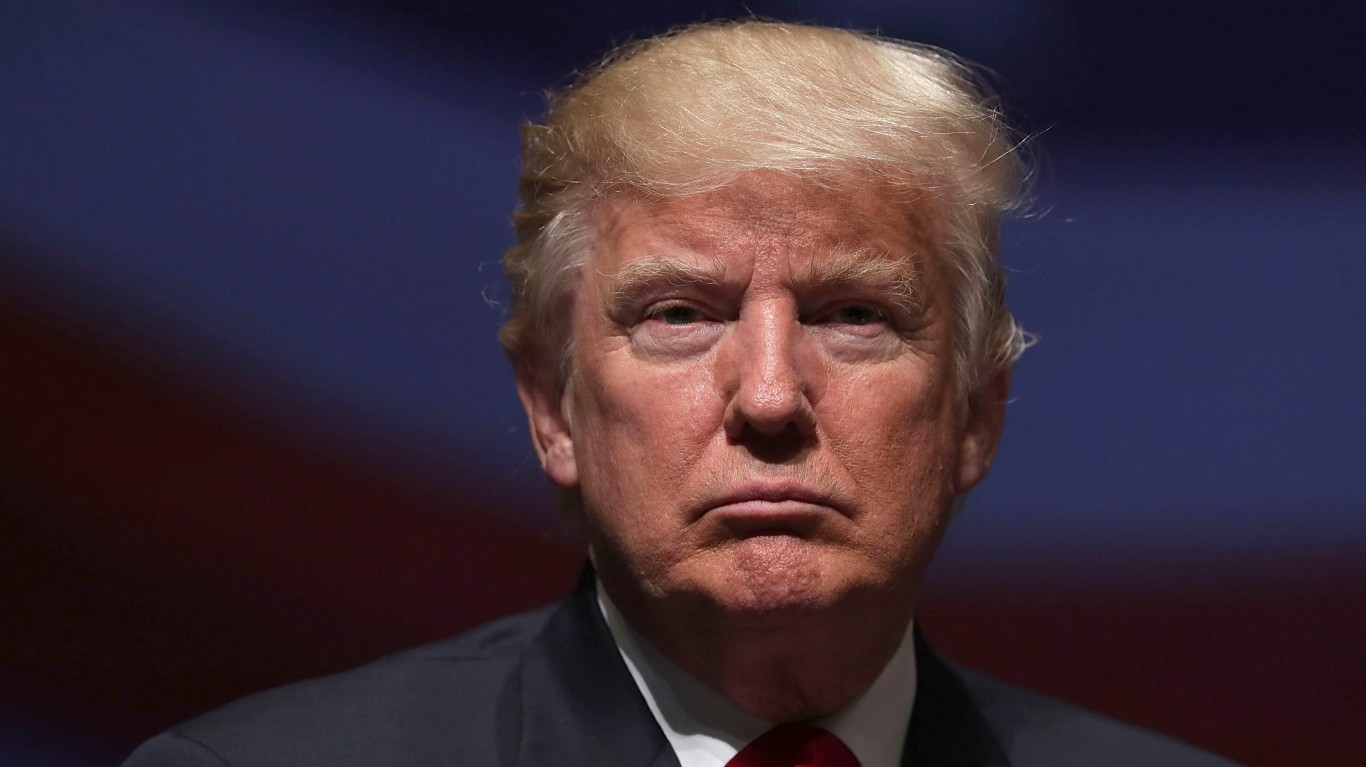
"President Trump arrived in Beijing on May 13, 2026 for a state-banquet summit with President Xi Jinping, accompanied by a phalanx of U.S. CEOs and a softer trade tone. Polymarket is pricing a 71.5% probability of AI export-control relief for China by May 22, 74.5% on a new U.S.-China Board of Trade, and 46.5% on a tariff reduction. The mood music is bullish. But the real question for anyone holding U.S. Big Tech is what tends to happen after the cameras leave."
"Every time Beijing has been characterized as warming to American technology, the American technology has eventually paid for the privilege of trying. Call it the Long Memory thesis: U.S. Big Tech does not win in China. It retreats, gets blocked, or pays the price of staying. I have been investing through these "opening up" cycles for more than a decade now, and really it's just the same thing over and over. Brutally consistent in fact."
"Alphabet ( NASDAQ:GOOGL | GOOGL Price Prediction) launched Google.cn in 2006 and exited mainland Chinese search in 2010 following the Operation Aurora cyberattacks. Project Dragonfly, a censored search effort, surfaced in 2018 and was abandoned. The lesson held. Alphabet still booked $109.9 billion in Q1 2026 revenue, up 22% year over year, with Cloud growing 63% and topping $20 billion. None of it comes from mainland search. The stock has compounded anyway, returning roughly 2,483% since January 2010."
"Uber ( NYSE:UBER) sold its China business to Didi Chuxing in August 2016, after burning roughly $2 billion trying to outspend a local competitor with a home-field referee. The retreat became the template. Uber today trades at $73.44 with a market cap of $149.49 billion and a P/E of 15x, valued on its global ride-share franchise. Amazon ( NASDAQ:AMZN) closed its China mark"
A state-visit summit between the United States and China is accompanied by a more optimistic trade tone and market-implied odds for AI export-control relief and tariff changes. Despite bullish signals, the key concern for U.S. Big Tech is what happens after public optics fade. Past “opening up” cycles have followed a consistent pattern: when Beijing appears more receptive to American technology, American technology ultimately pays for the privilege through retreat, blocking, or added costs. Examples include Google’s exit from mainland search after cyberattacks and subsequent censored efforts, Uber’s costly China withdrawal after heavy spending, and Amazon’s China operations shifting away from its initial model.
Read at 24/7 Wall St.
Unable to calculate read time
Collection
[
|
...
]