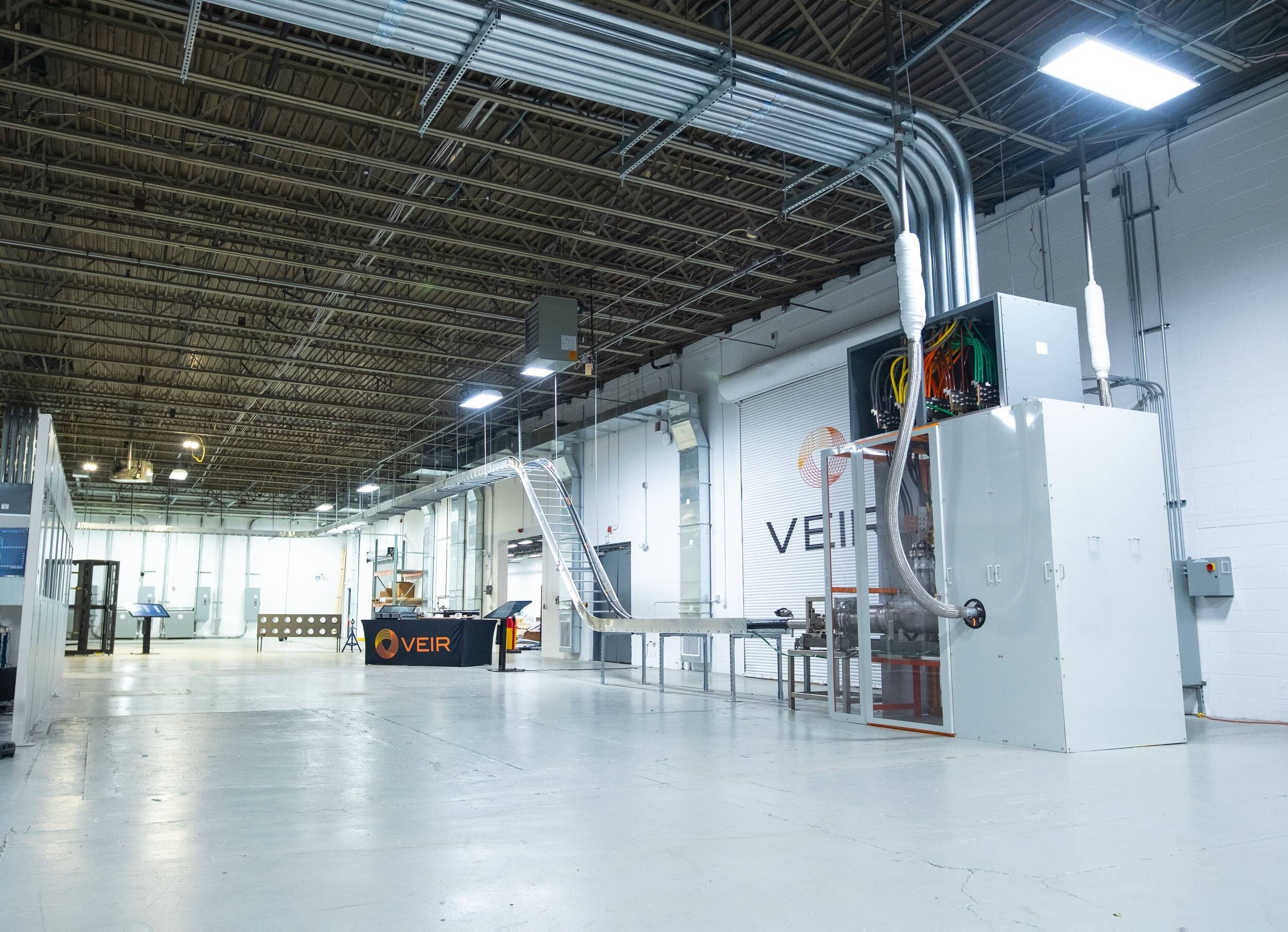
"High-temperature superconductors offer lossless power delivery thanks to the elimination of nearly all electrical resistance thanks to cooling provided by liquid nitrogen surrounding the superconducting tape used to move electrical energy. HTS cables don't generate heat either, and according to Microsoft, are more spacially efficient than traditional cables."
""Microsoft is investigating HTS technology to understand how our datacenters can meet the growing demand for power and how to improve our operational sustainability," Speirs said. "Because superconductors take up less space to move large amounts of power, they could help us build cleaner, more compact systems.""
"HTS cables aren't widely deployed, even in conventional grid-scale power operations, because they're expensive and superconducting materials aren't readily available."
High-temperature superconductors (HTS) enable near-lossless power transmission by eliminating almost all electrical resistance when cooled with liquid nitrogen, reducing heat generation. HTS cables occupy less physical space than copper or aluminum conductors and can increase electrical density without expanding datacenter footprints. Traditional conductors force tradeoffs such as substation expansion, adding feeders, reduced deployment density, or halted facility growth. HTS could break that tradeoff by allowing higher power delivery in smaller spaces. Significant barriers to adoption include high cost and limited availability of superconducting materials, and HTS is not yet widely deployed.
Read at Theregister
Unable to calculate read time
Collection
[
|
...
]