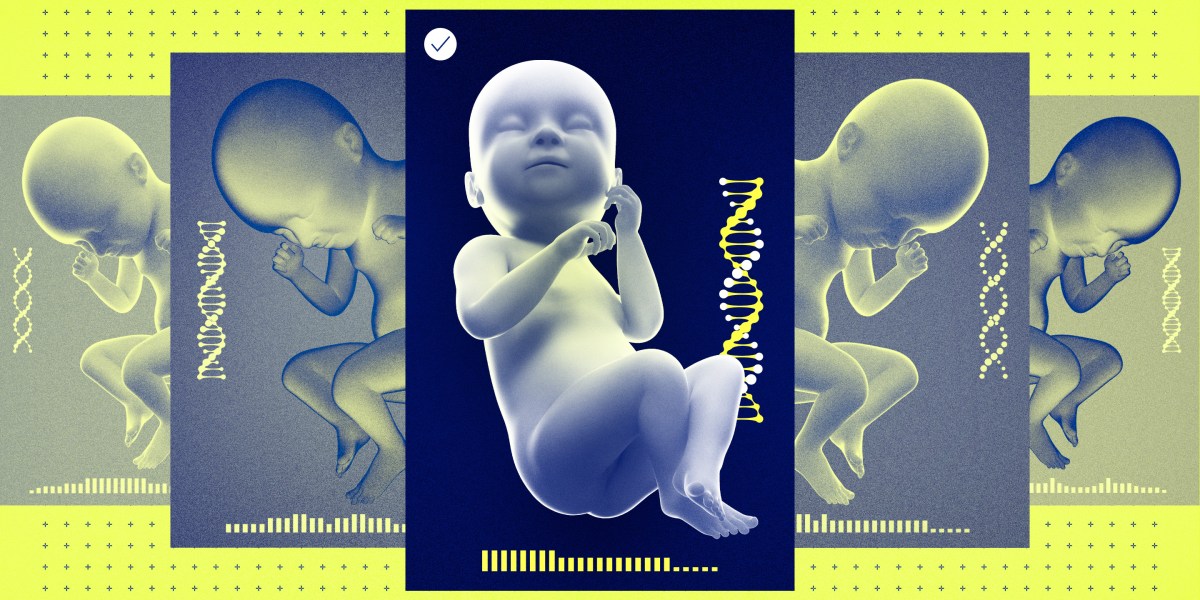
"He wants his future children to be shorter and more comfortable on commercial planes. "It's annoying to be super tall," he said. "Nothing is made for you." Chief science officer Tobias Wolfram has already banked frozen embryos with his partner in preparation for their future family. His great-grandparents lived past 100 with no cancer or serious health problems, suggesting a family tendency toward healthy aging. But there's depression on his side of the family."
"Jonathan Anomaly, a communications executive with Herasight, is approaching 50 and planning a family with his partner, 37. His grandmother was a genius, said Anomaly, but she suffered from five different autoimmune disorders that kept her homebound. He plans to screen embryos for autoimmune diseases, and like Christensen, Anomaly said he'll screen for height. But he wants potential sons to be slightly taller than his 5 feet 9 inches."
"This is the new era of family planning emerging across the Bay Area, a place known for its concentration of extreme wealth, high risk tolerance, affinity for new technology, and early-adopter mentality. Rather than having babies the Where Did I Come From? way, prospective parents are blazing an unprecedented approach to family planning. Gone are the wealthy parents who pay women for their eggs because they have desirable traits or who seek out sperm donors base"
Herasight founders pursue embryo screening and selection to influence offspring traits such as height, cognitive aptitudes, and disease susceptibility. Michael Christensen prefers shorter children for comfort on commercial flights. Tobias Wolfram banked frozen embryos and seeks screening to reduce inherited depression while noting family longevity. Jonathan Anomaly plans to screen for autoimmune disorders and slightly taller height for potential sons. This approach reflects a Bay Area trend among wealthy, risk-tolerant, tech-oriented prospective parents who favor genomic selection over traditional donor matching. The movement prioritizes selecting embryos for health indicators and desirable physical or neurocognitive characteristics.
Read at Fortune
Unable to calculate read time
Collection
[
|
...
]