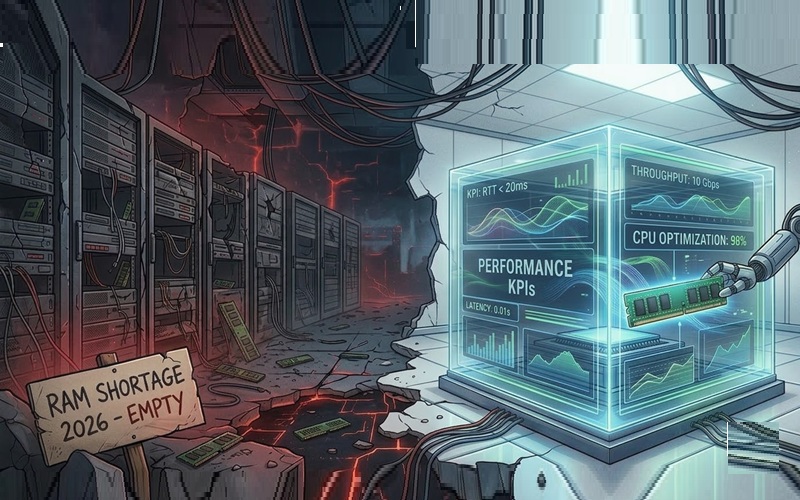
"If rising costs extend hardware lifecycles to the point where businesses are holding onto old hardware for longer, then it might ironically be the thing that encourages developers to rekindle their love for software optimisation. It's time for software to start doing the heavy lifting. But for that to happen, developers of desktop software (and mobile apps especially) may want to look back to the lean and mean principles of embedded systems."
Software development has historically relied on cheap hardware to compensate for inefficient code, a phenomenon called RAMpocalypse. Developers would add more RAM and faster CPUs rather than optimize applications. However, semiconductor shortages and rising hardware costs have changed this dynamic across all software domains—from video games to IoT devices. Maurice Kalinowski from The Qt Group suggests this crisis presents an opportunity: extended hardware lifecycles may encourage developers to prioritize software optimization. By adopting lean principles from embedded systems development, teams can build more efficient applications. The challenge lies in overcoming the prototype dilemma, where developers choose convenient high-level languages during initial development, creating inefficient foundations that persist through production.
#software-optimization #hardware-costs #rampocalypse #embedded-systems-principles #developer-efficiency
Read at Techzine Global
Unable to calculate read time
Collection
[
|
...
]