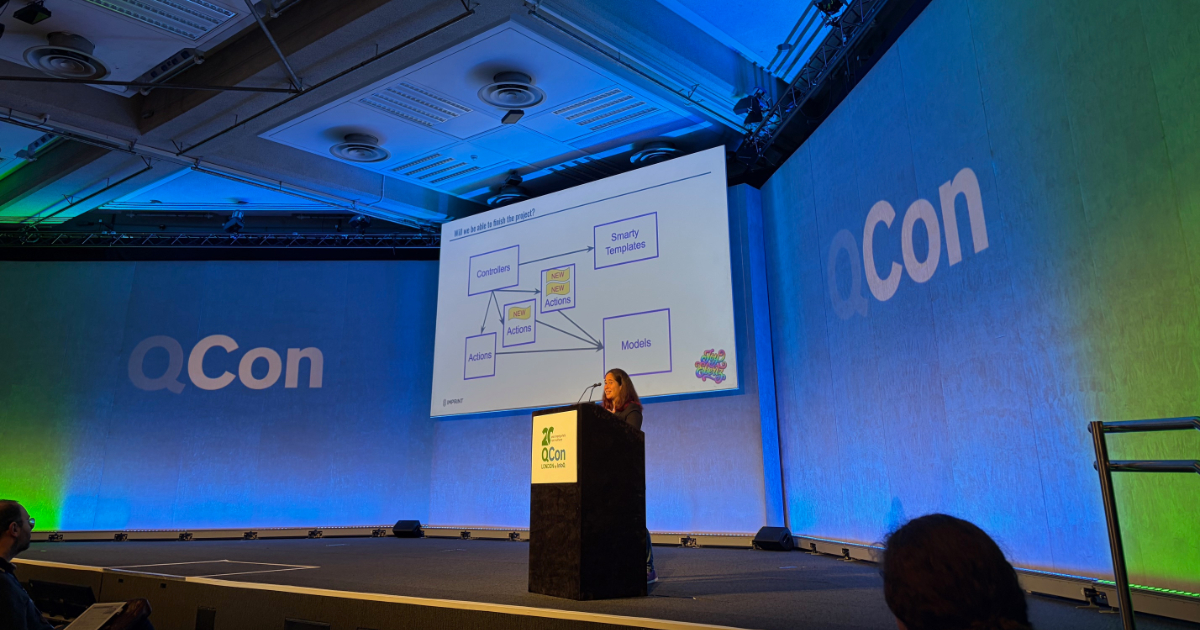
"The first question, 'What is the cost if we don't do anything?', examines the breadth and depth of impact across developers and users, including cascading effects such as customer churn and developer attrition. Ebertz highlighted 'ticking time bombs' as a particular category, distinguishing between scale problems that come with warning systems and security vulnerabilities where exploit probability is uncertain."
"The third question Do we need to fix it the right way? challenges whether a proper fix is even necessary, suggesting that an 80% solution at a fraction of the cost may be sufficient. She offered practical examples such as nightly database cleanup scripts, hard-coded limits, and monthly server restarts, noting that a one-hour hard-coded solution can sometimes accomplish what would take four weeks to build properly."
"Ebertz opened by challenging the perfectionist mindset that all tech debt must be resolved. She argued that having a perfect codebase is meaningless if the company goes under, and that the real goal is to write the best software possible for the situation at hand."
Joy Ebertz presented a six-question framework for prioritizing technical debt, rejecting the notion that all debt must be eliminated. The framework evaluates the cost of inaction, including developer attrition and customer churn, against the cost of fixing issues, which includes opportunity costs and training expenses. A key insight is that perfect solutions are unnecessary; pragmatic 80% fixes often provide sufficient value at a fraction of the cost. Examples include nightly cleanup scripts and hard-coded limits that solve problems in hours rather than weeks. The framework helps teams distinguish between critical issues requiring immediate attention and debt that can be deferred or addressed with temporary solutions.
Read at InfoQ
Unable to calculate read time
Collection
[
|
...
]