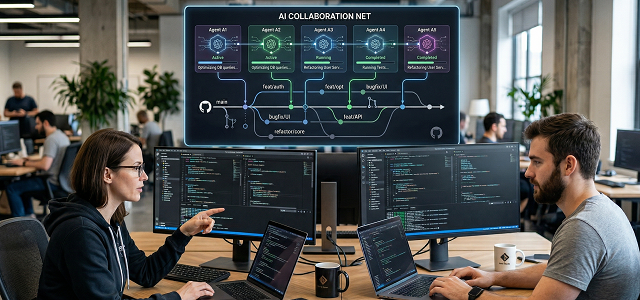
Open source coding agents have evolved from autocomplete and code assistants into autonomous systems that can write, test, and maintain software. Foundation model improvements have increased their usefulness and power, enabling them to handle broader workflows such as debugging and dependency management. This change reflects a cultural shift in which developers orchestrate systems that generate and manage code rather than writing every line manually. Open source agents emphasize model flexibility, transparency, inspectability, and customizability for enterprise workflows. Closed systems can lock users into specific models, APIs, and workflows, while open ecosystems support future-proofing as the model landscape changes quickly.
"These agents are just getting more and more useful, more and more powerful... It's becoming harder and harder to ignore how much value they can create."
"Early tools focused on helping developers write code faster. Today's agents go much further, including handling entire workflows, from debugging to dependency management. But this isn't just a technological change. It's a cultural one."
"Closed systems lock users into specific models, APIs, and workflows. Open source coding agents, by contrast, emphasize: Model flexibility (model-agnostic design) Transparency and inspectability Customizability for enterprise workflows Community-driven innovation"
"You want to make sure you're future-proof... if a new model is suddenly bet"
#open-source #ai-coding-agents #autonomous-software-development #model-flexibility #enterprise-workflows
Read at Medium
Unable to calculate read time
Collection
[
|
...
]