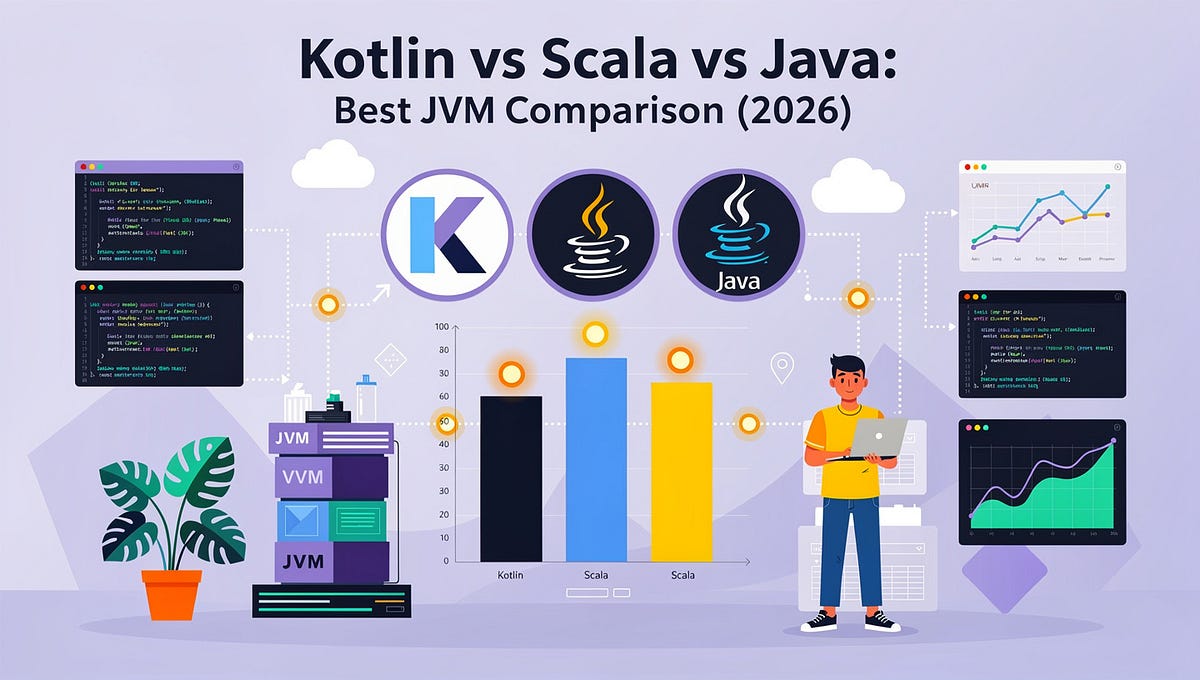
Java remains dominant after 30 years, used by 99% of organizations, over 90% of Fortune 500 firms, and holding roughly 25% programmer market share; it powers critical systems in banking, healthcare, and government due to unmatched stability. Java's drawbacks include verbosity, Oracle licensing costs, and persistent null pointer exceptions. Kotlin has 2.5 million developers, a 30% growth rate, 63% developer satisfaction versus Java's 54%, and Google endorsement for Android, making it well-suited for polished mobile apps. Scala is a specialist choice for backend systems at companies like X, Airbnb, LinkedIn, and Netflix, and Scala developers often command higher salaries.
"Java turned 30 in 2025. Thirty years, mate. That's older than some of the devs writing it. According to industry data, 99% of organizations still actively use Java. Over 90% of Fortune 500 companies depend on it for their core systems. Kotlin's been on a tear. JetBrains reports 2.5 million developers now use it worldwide. With a 30% growth rate, it's not slowing down."
"Banks run on Java. Healthcare systems run on Java. Government infrastructure runs on Java. When things absolutely cannot break, you reach for Java. One developer I worked with put it bluntly: "Java's boring technology wins in production." Java's verbose. You'll write more code to do the same thing. Oracle's pricing model gives CIOs nightmares. Many enterprises are exploring alternatives just for cost reasons."
Read at Medium
Unable to calculate read time
Collection
[
|
...
]