"Cloudflare recently announced the general availability of remote bindings for local development. Remote bindings let developers connect to production, deployed resources in their Cloudflare account, rather than using local simulations. Thanks to the new feature, developers can connect to deployed resources, such as R2 buckets and D1 databases, while running Worker code on their local machine, enabling testing of local code changes against real data and services."
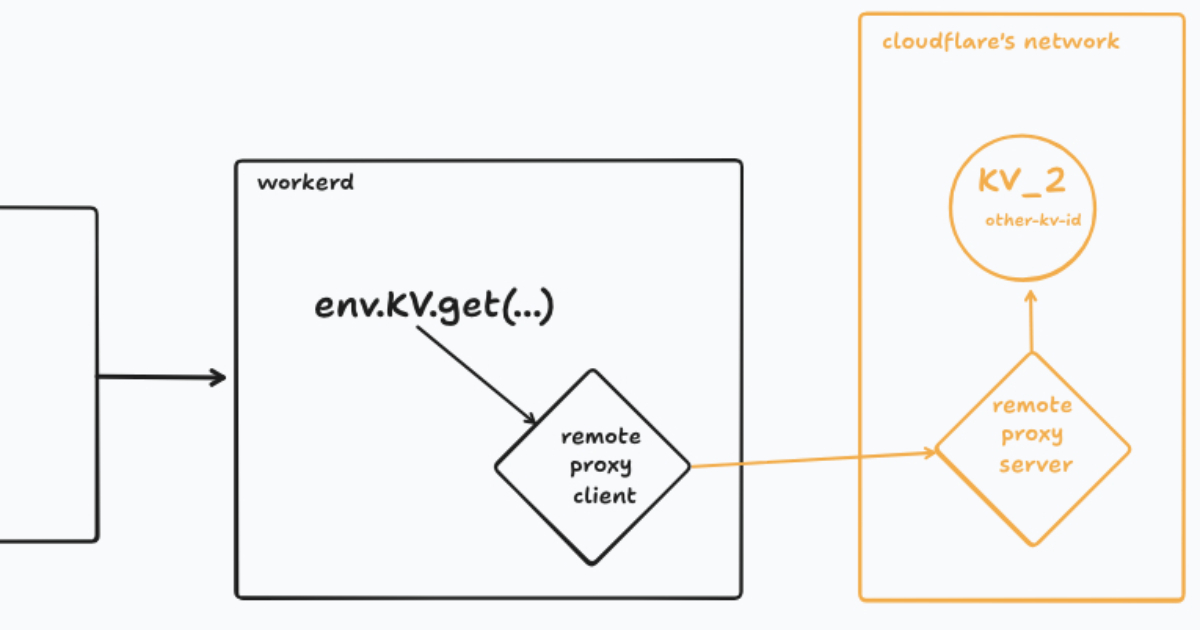
"We wanted to make it really easy for developers to access remote resources without having to change their production Workers code, and so we landed on a solution that required us to fetch data from the remote resource at the point of use in your Worker (...) We realised that we already had a ready-made API waiting for us - the one we use in production! Most bindings on the Workers platform boil down to essentially a service binding."
Cloudflare released remote bindings for local development that allow Worker code running locally to access production deployed resources such as R2 buckets and D1 databases. Wrangler v4.37.0, the Cloudflare Vite plugin, and @cloudflare/vitest-pool-workers support remote bindings. Developers can configure bindings (for example, setting r2_buckets with binding MY_BUCKET and remote: true) so env.MY_BUCKET requests proxy to the deployed bucket while code executes locally. Remote bindings provide faster execution, avoid seeding local databases, and can be paired with environments to use staging data during local development while protecting production data. Under the hood, bindings use service bindings and fetch data at the point of use via the existing production API.
Read at InfoQ
Unable to calculate read time
Collection
[
|
...
]