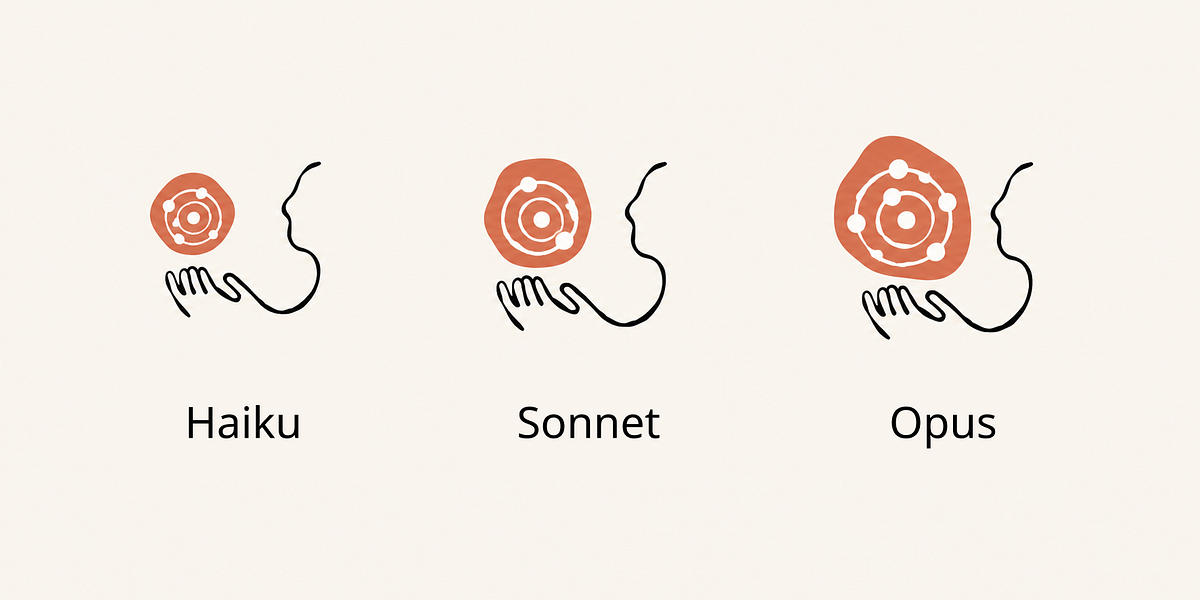
Claude Code provides three model options: Haiku, Sonnet, and Opus. Using Opus for all tasks is discouraged because it consumes many tokens quickly and is the slowest option. Sonnet is presented as the best balance of quality, speed, and cost for most work. Sonnet is recommended for routine design and coding tasks, including brief research and rapid prototyping. It can handle most feature development needs, including complex onboarding flow design. Example onboarding requirements include a multi-step wizard, progress persistence, and validation between steps.
"A common mistake that many Claude Code users make is using Opus for all kinds of tasks. This approach is not recommended for two reasons: Opus is very token-intensive, meaning you can quickly reach your daily/weekly usage quota, and it is also the slowest model on this list."
"Sonnet is the best balance of quality, speed, and cost for most Claude Code work. I tend to use Sonnet as my default model for all kinds of routine design tasks, from brief research to rapid prototyping."
"Despite a popular belief, you don't need to switch to Opus to build a new feature for your product. Sonnet will work fine in 90% of cases. It can handle even complex features such as onboarding flow design."
"Implement user onboarding flow. Requirements:- multi-step wizard- progress persistence- validation between steps..."
Read at Medium
Unable to calculate read time
Collection
[
|
...
]