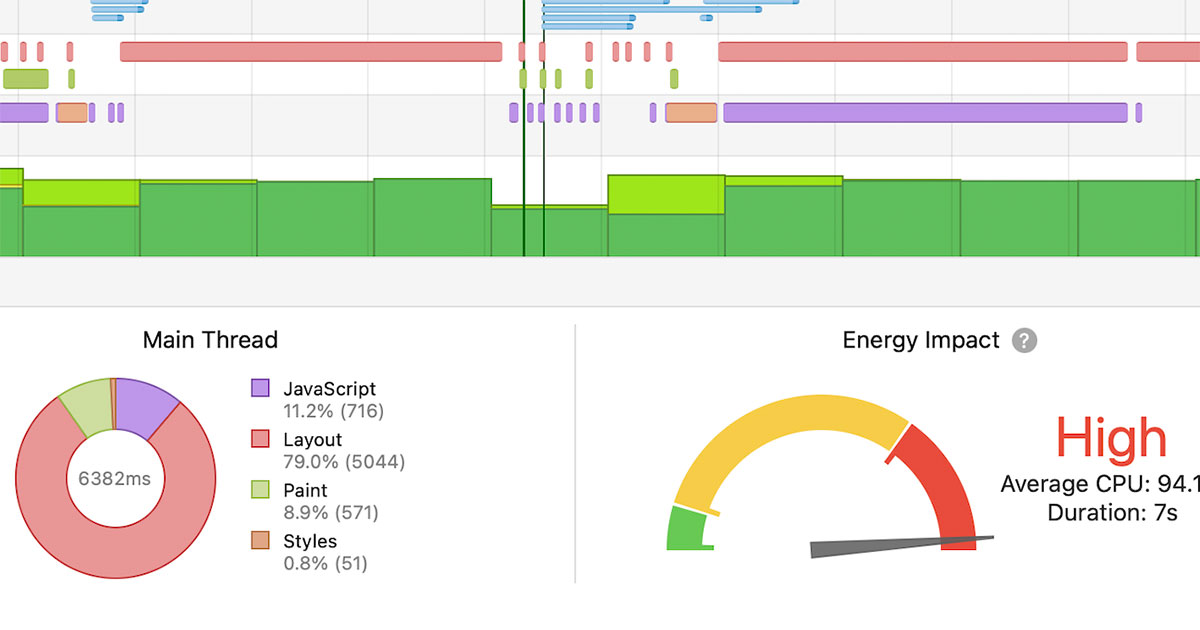
"in a modern web app there are many potential causes of a performance problem: third-party JavaScript, overburdened servers, bloated assets, missing database indexes - a list as long as your arm. But decades of building for the web told me that this was a frontend problem. I could just smell it. The page looked janky while loading. And despite being the least-bad approach for web frontends today, the React ecosystem is lousy with ways for a codebase to get tangled, slow, and fishy."
"So to prove my theory, I explained to Claude that the dashboard was loading slowly, that it surely had some React problems, and to analyze it and rank them from most to least serious. And sure enough, Claude found a bunch of React fishiness - unnecessary re-renders, missing memoizations. We still weren't on React Compiler, which I hadn't realized. So I had Claude do a first pass on the easiest and most serious React issues, and..."
A dashboard regression increased load time from roughly one second to ten seconds, prompting investigation. Initial focus targeted React and common frontend causes, with automated assistance flagging unnecessary re-renders and missing memoization. Applying those React fixes produced almost no improvement. The slowdown proved specific to Safari and was not explained by server latency or third-party scripts. Detailed profiling using the Safari performance inspector guided deeper debugging. Ultimately, eliminating the underlying bottleneck with a single trivial code change delivered a dramatic speedup of about 100x.
Read at Allen Pike
Unable to calculate read time
Collection
[
|
...
]