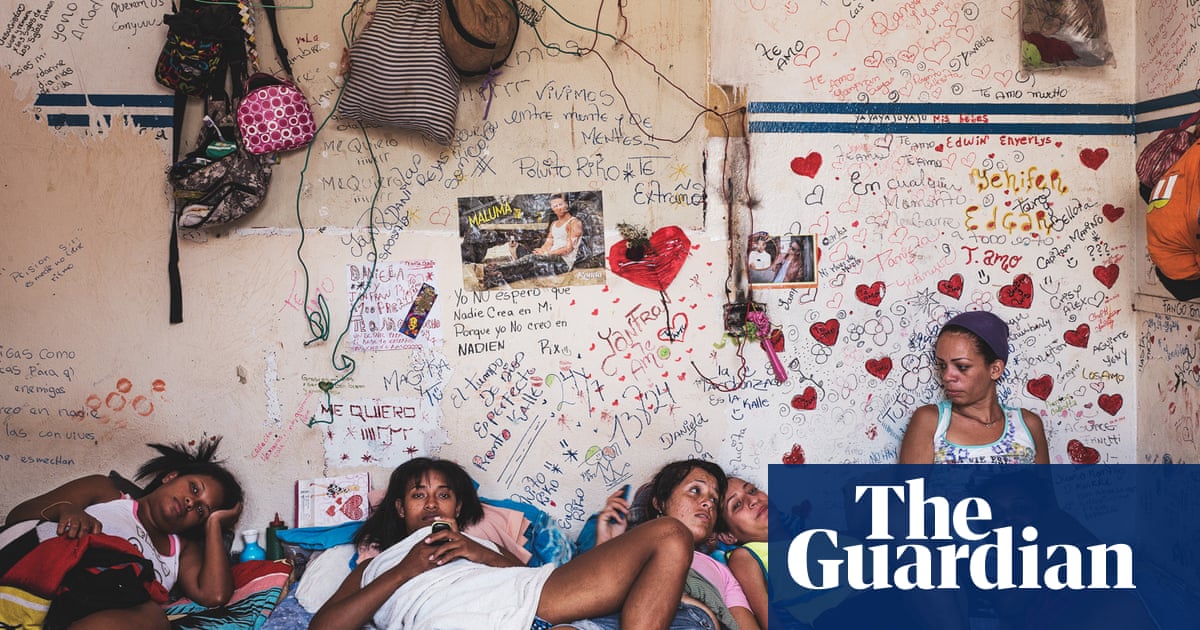
A former investigation office in Poli-Valencia was converted into a cell where women improvised a living space, decorating walls with names, phrases and small drawings. The cell lacked ventilation, running water and regular access to food, water or medical care. Detainees often did not know their lawyers or trial dates and waited in prolonged inactivity for visits. Physical closeness and shared possessions provided limited comfort. Some women had been effectively disappeared into the system, exemplified by a sentenced detainee whose family was unaware of her whereabouts while her child faced serious illness.
"When I returned a year later, the space had been transformed. The women had made it their own, covering the walls with names, phrases and small drawings of hearts, even taping up a poster of the Colombian singer Maluma. What had once been a sterile office now held traces of their presence, their effort to hold on to a sense of identity in a place meant to erase it."
"On one wall, someone had carved a phrase of both defiance and exhaustion: I don't expect anyone to believe in me because I don't believe in anyone. You see women resting on thin mattresses on the floor, bodies intertwined, one woman's legs serving as a pillow for another, as if physical closeness were the only comfort left in that airless room."
"Many did not know their lawyers, did not know when their trial would be, did not receive food, water or medical attention regularly; they waited in a kind of deranged inactivity for the possibility of a visit. Two women in the image stayed with me long after I walked out of that room. Daniela, wearing the pink T-shirt, had been sentenced long before I met her. When I first photographed her in 2017, her family was unaware of her whereabouts."
Read at www.theguardian.com
Unable to calculate read time
Collection
[
|
...
]