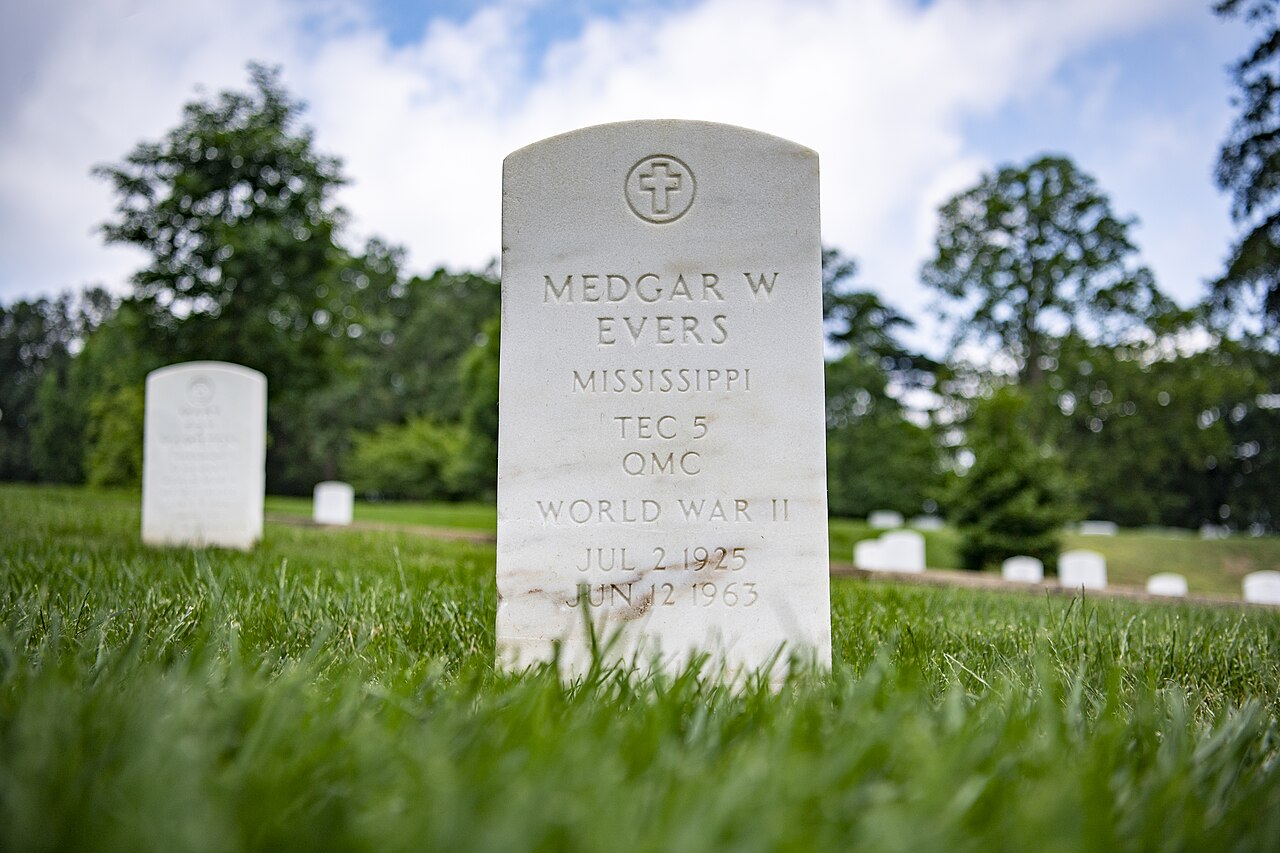
"Evers, who served in the U.S. Army in segregated units that were sent to multiple combat areas in Europe during World War II, became the first field secretary in Mississippi for the NAACP in 1995, described as a very public leadership role on the website for the Medgar and Myrlie Evers Home National Monument. His work included travell[ing] throughout the state encouraging people to register to vote, investigat[ing] and document[ing] cases of discrimination and violence against blacks,"
"At that time, Blacks were heavily disenfranchised by Jim Crow laws in Mississippi and therefore excluded from juries. The White Citizens' Council paid for his lawyers. Two all-white juries in 1964 deadlocked and did not reach a verdict but Evers' widow, Myrlie Evers, was able to get the county to take up the case again in the 1990s. In 1994, with new evidence, De La Beckwith was brought to"
Medgar Evers served in segregated U.S. Army units during World War II and later became the first field secretary in Mississippi for the NAACP in 1995, taking on a very public leadership role. His work involved traveling statewide to encourage voter registration, investigating and documenting discrimination and violence against Black people, collaborating with other civil rights groups, and promoting youth involvement. On June 12, 1963, Evers was shot in the back outside his home; the assassination triggered large civil rights protests and nonviolent marches and helped motivate passage of the Civil Rights Act. Byron De La Beckwith, affiliated with white supremacist groups, was arrested soon after, but Jim Crow disenfranchisement excluded Black jurors, two all-white juries deadlocked in 1964, and the case was later reopened in the 1990s with new evidence.
Read at www.mediaite.com
Unable to calculate read time
Collection
[
|
...
]