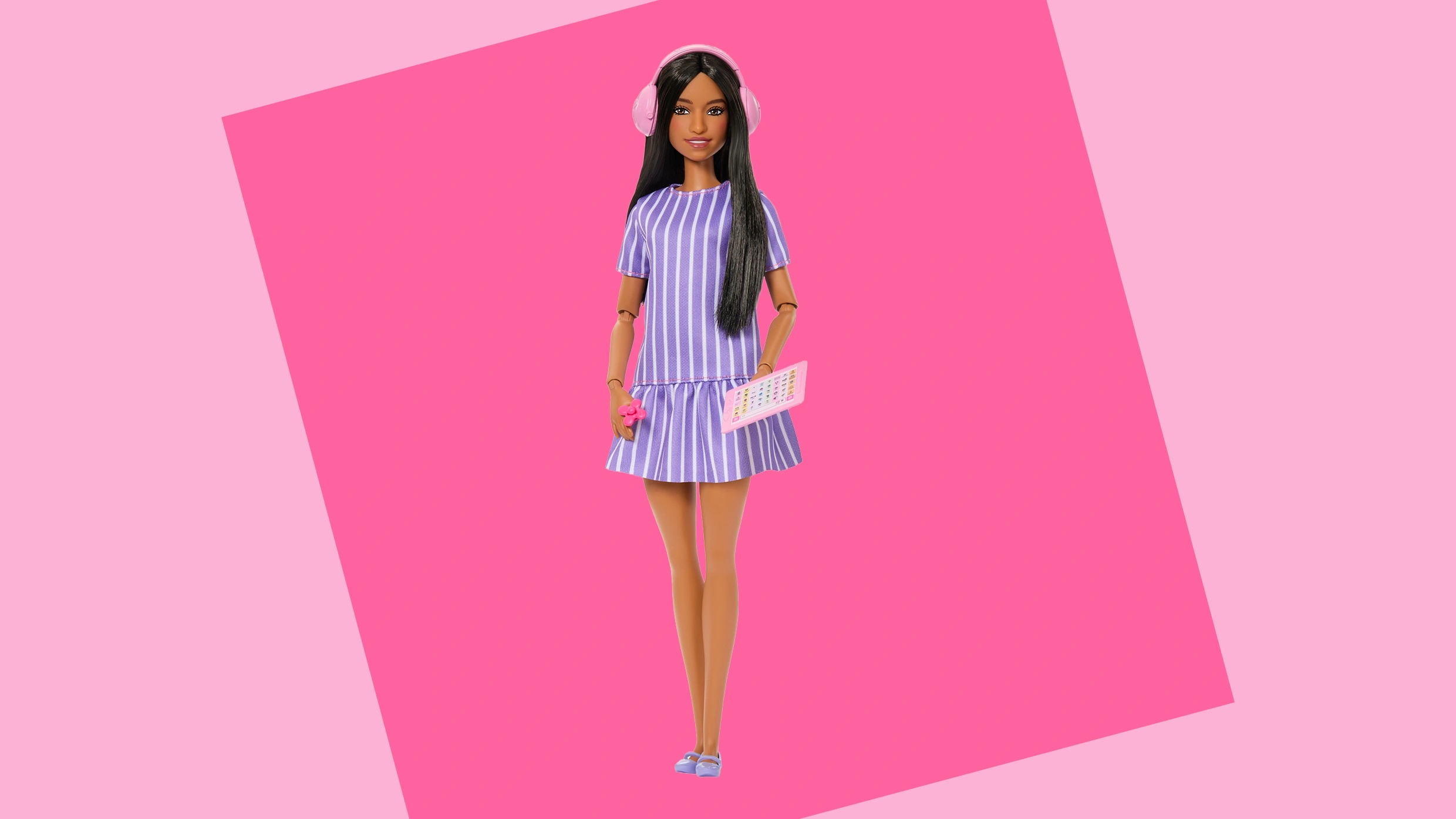
Mattel introduced an autistic Barbie as part of a diversity-focused line that includes models representing Down syndrome, blindness and vitiligo. The doll was developed over more than 18 months in partnership with the Autistic Self Advocacy Network to reflect ways autistic people may experience and process the world. Autism encompasses a broad spectrum of behaviors and many traits are not immediately visible, which made design choices challenging. The design includes eyes that shift slightly to the side to represent avoidance of direct eye contact and articulated elbows and wrists to acknowledge stimming and other sensory gestures. The team selected an A-line dress with short sleeves and a flowy skirt.
"Mattel said it developed the autistic doll over more than 18 months in partnership with the Autistic Self Advocacy Network, a nonprofit organization that advocates for the rights and better media representation of people with autism. The goal: to create a Barbie that reflected some of the ways autistic people may experience and process the world around them, according to a Mattel news release."
"That was a challenge because autism encompasses a broad range of behaviors and difficulties that vary widely in degree, and many of the traits associated with the disorder are not immediately visible, according to Noor Pervez, who is the Autistic Self Advocacy Network's community engagement manager and worked closely with Mattel on the Barbie prototype. Like many disabilities, "autism doesn't look any one way," Pervez said."
"For example, the eyes of the new Barbie shift slightly to the side to represent how some people with autism sometimes avoid direct eye contact, he said. The doll also was given articulated elbows and wrists to acknowledge stimming, hand flapping and other gestures that some autistic people use to process sensory information or to express excitement, according to Mattel."
Read at Fast Company
Unable to calculate read time
Collection
[
|
...
]