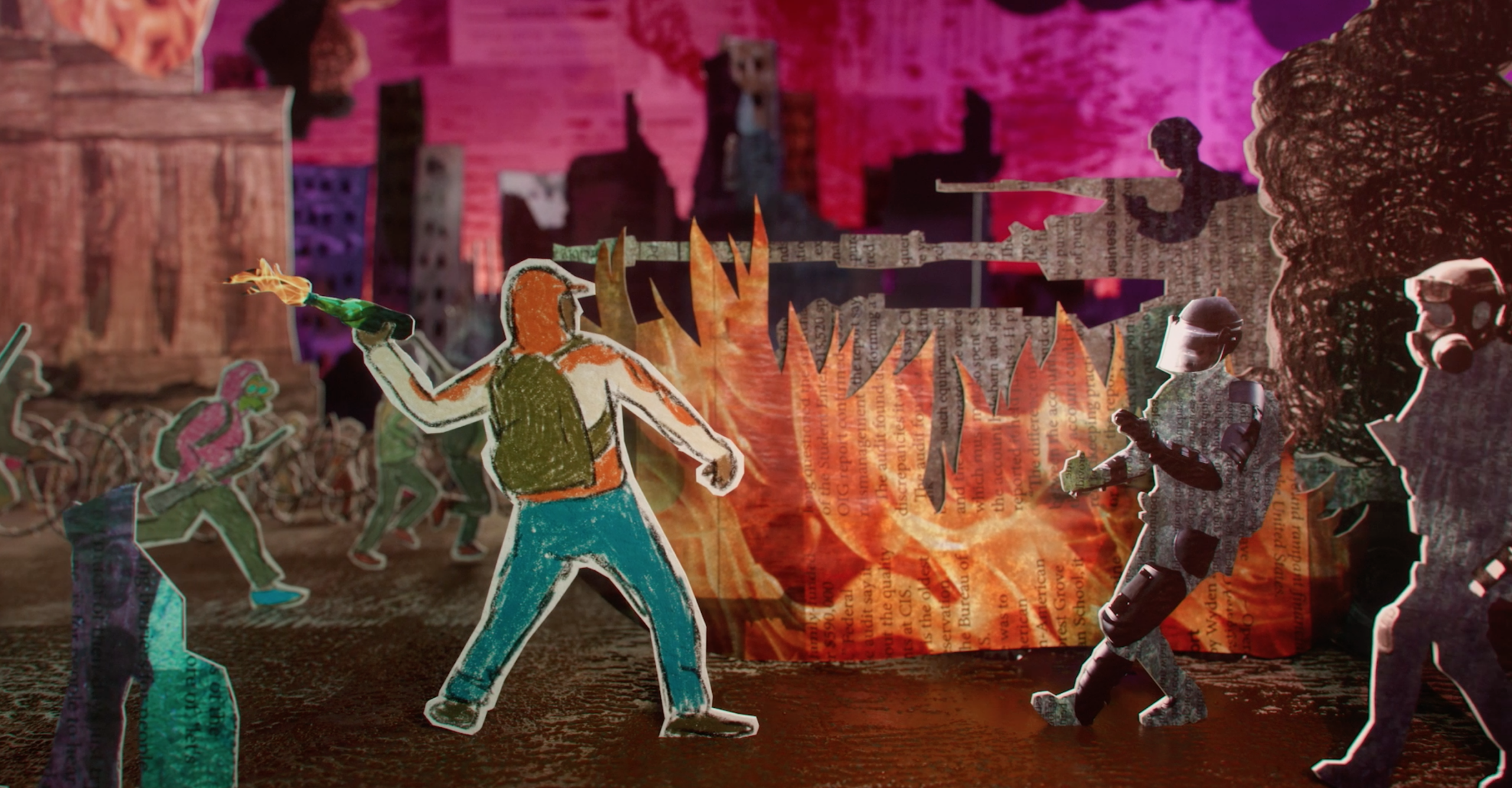
A person describes being arrested for minor “quality-of-life” offenses and experiencing jail conditions under fluorescent light. After release, neighbors share similar lockdown experiences shaped by repeated cycles of incarceration for men of color. The account links expanding ICE detention and the labeling of left-wing groups as “domestic terrorists” to a growing threat of imprisonment. It also connects increased surveillance, including artificial intelligence, to the risk of the U.S. becoming a totalitarian carceral state. The possibility of a world without prisons is presented as beginning in artistic imagination. Prison abolitionist art is described as spanning centuries and centering three themes: prison as a metaphor for society, the mind escaping metaphorical prisons, and imagining a world without mass incarceration. A strong social movement is framed as necessary to fight these forces, guided by such visions.
"Ibanged my head on the bars. It was 2:00 am. I was in a Brooklyn jail. Under the fluorescent light, other men slept on the bench. Each one of us was arrested for so-called quality-of-life crimes like drinking a beer on a stoop, blasting a radio, or being unhoused. I shook the bars again. The walls closed in on me. I had a hard time breathing."
"When I got out the next day, neighbors told me their lockdown stories. In many cities around the U.S., going to jail is a rite of passage. So many generations of us, men of color, have cycled through prison. It shaped how we see our future. I didn't want that to be my future, or my son's future."
"Now the Trump administration is expanding Immigration and Customs Enforcement (ICE) jails, and more are threatened with imprisonment as the administration labels left-wing groups and individuals " domestic terrorists." Add to this the use of artificial intelligence to enhance state and corporate surveillance, and we face a future of the U.S. becoming a totalitarian carceral state."
"Prison abolitionist art has three major themes: using prison as a metaphor for society; showing how the mind escapes metaphorical prisons; and, finally, imagining a world without mass incarceration. A strong, popular social movement can fight it. We need a vision to guide it. Prison abolitionist art shows the way."
Read at Truthout
Unable to calculate read time
Collection
[
|
...
]