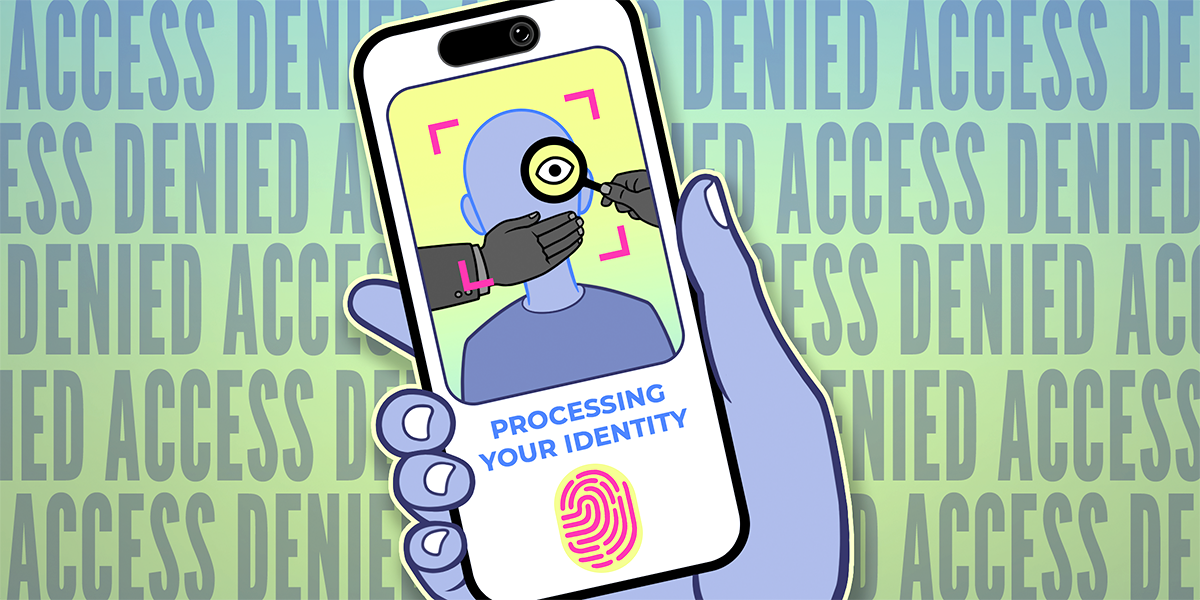
"Age-verification laws may sound straightforward to some: protect young people online by making everyone prove their age. But in reality, these mandates force users into one of two flawed systems- mandatory ID checks or biometric scans -and are deeply discriminatory. These proposals burden everyone's right to speak and access information online, and structurally excludes the very people who rely on the internet most."
"Age-verification mandates most harshly affect people with disabilities. Facial recognition systems routinely fail to recognize faces with physical differences , affecting an estimated 100 million people worldwide who live with facial differences, and "liveness detection" can exclude folks with limited mobility. As these technologies become gatekeepers to online spaces, people with disabilities find themselves increasingly blocked from essential services and platforms with no specified appeals processes that account for disability."
Age-verification mandates require users to upload government IDs or submit biometric scans to access sexual content or create social media accounts. The mandates force reliance on two flawed systems—document checks or facial recognition—and produce discriminatory outcomes. Millions of adults lack current identification, with Black, Hispanic, undocumented, disabled, and low-income communities disproportionately affected. Facial recognition has higher error rates for communities of color and routinely fails for people with facial differences; liveness detection can exclude those with limited mobility. The measures restrict speech and access to information, block essential services, and often lack disability-centered appeals processes.
Read at Electronic Frontier Foundation
Unable to calculate read time
Collection
[
|
...
]