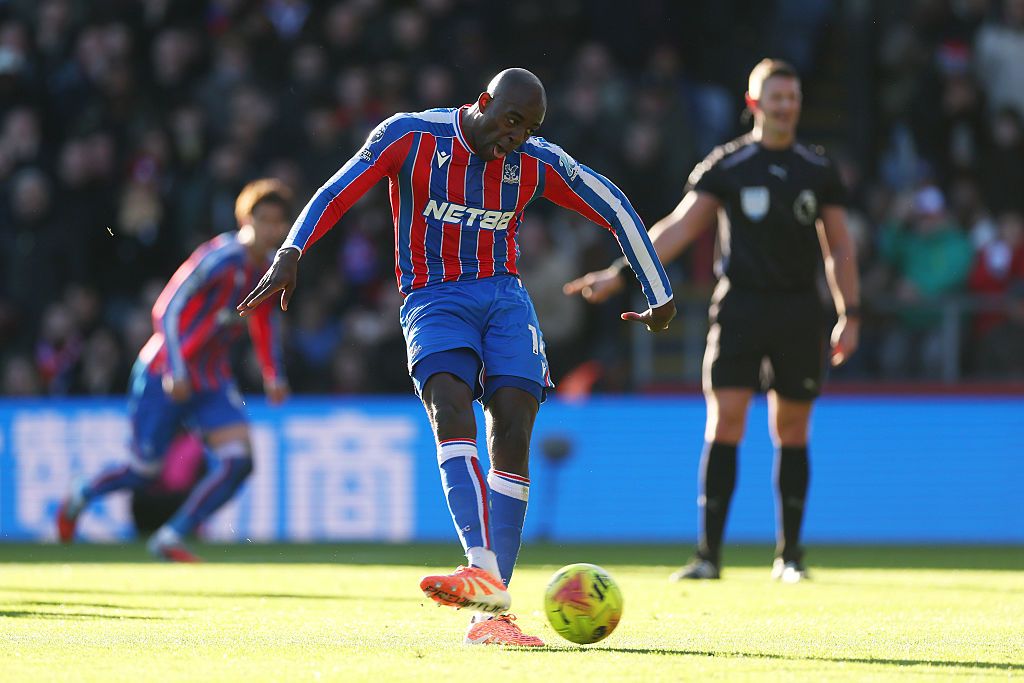
"The 28-year-old won the spot-kick after being brought down in the box by Leny Yoro, and duly stepped up to convert the opportunity. He did so on the first time of asking, but VAR spotted that the Frenchman had struck the ball twice, kicking it with his right foot into his left foot. You may like Mateta duly converted the second attempt, too (Image credit: Getty Images) Rather than ruling the goal out and continuing with the game, as happened to Atletico Madrid striker Julian Alvarez in a similar situation against Real Madrid in the Champions League last season, Mateta was given another chance by the officials."
"He stepped up again and tapped the ball low into the opposite corner from his first, wrong-footing goalkeeper Senne Lammens for the second time. Despite a retake call from VAR, Mateta converts from the penalty spot to take Palace ahead @TNTSports & @DiscoveryPlusUK pic.twitter.com/x8IuhFvt75November 30, 2025"
"Mateta was allowed to re-take the penalty due to a rule change over the summer, which was brought in as a result of that Alvarez incident. Previously, Law 14 stated that the kicker must not play the ball again until it has touched another player, but the International Football Board Association (IFAB), who control the game's rules, has now updated it in circumstances like Mateta's."
"Where the double touch was clearly unintentional, the taker is now allowed to re-spot the ball and take it again. That does not apply if they intentionally touch the ball twice, in which case the defending team will be awarded a free-kick. The change was brought in on 1 July, and was communicated to all relevant parties over the summer."
Jean-Philippe Mateta won a penalty after being fouled by Leny Yoro and struck the ball twice on his initial attempt. VAR identified the double touch and signalled a retake under a summer IFAB rule change that permits re-taking when the second touch is clearly unintentional. Mateta retook and scored by tapping the ball low into the opposite corner, wrong-footing goalkeeper Senne Lammens. Previously Law 14 forbade the kicker from playing the ball again until another player touched it. Intentional double touches still result in a free-kick. The IFAB change took effect on 1 July and was communicated over the summer.
Read at www.fourfourtwo.com
Unable to calculate read time
Collection
[
|
...
]