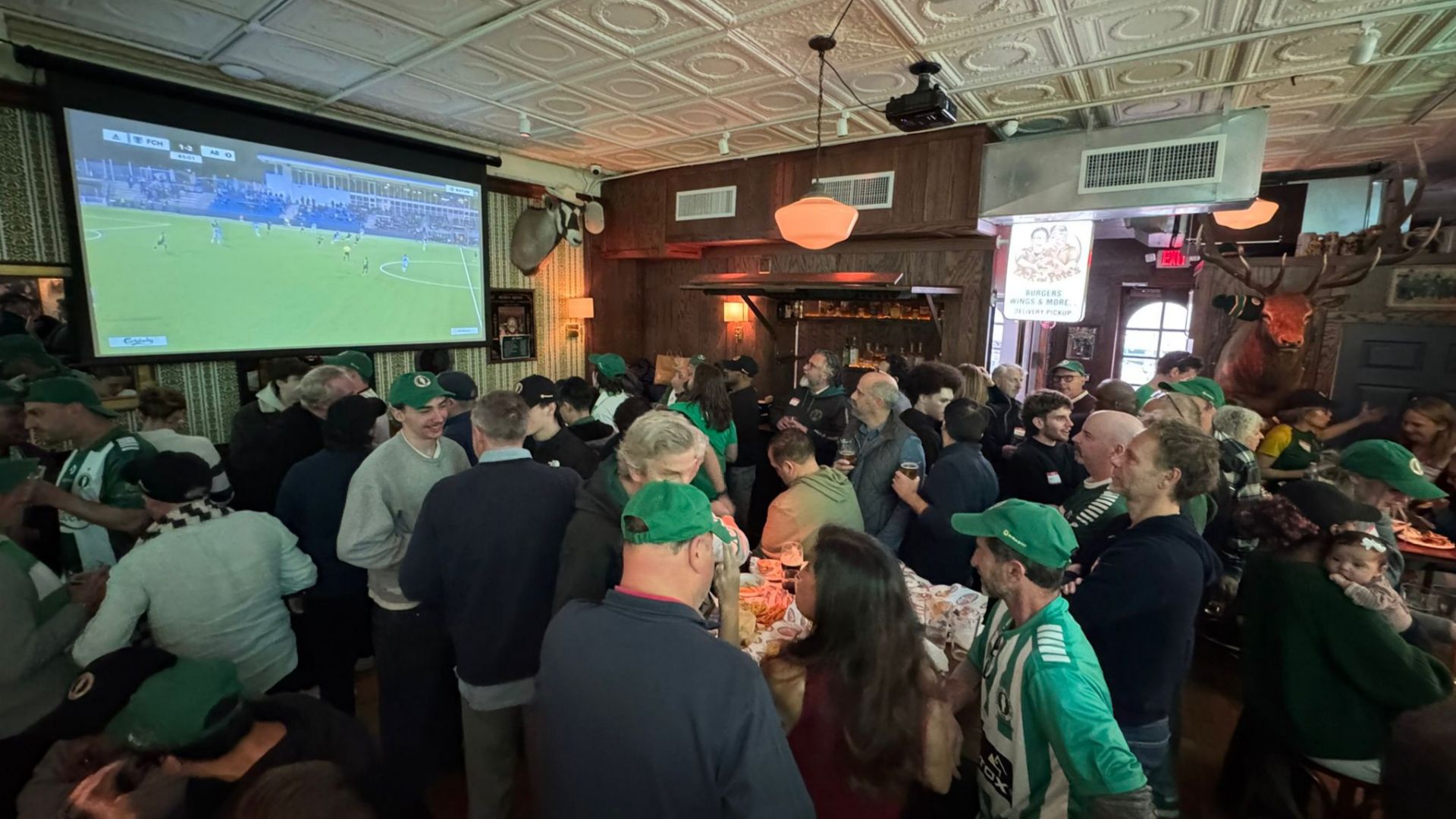
"Joe Gordon put a hat on the moose's head that peered over the musty back room of a Williamsburg bar. It was the centerpiece of a crowded space, and Gordon knew, for some reason, that the trophy screwed onto the wall needed dressing up. He could neither confirm nor deny whether placing that headwear - branded with the badge of the Danish club he owns, Akademisk Boldklub (AB) - had any impact. But his team was down 1-0, and he was feeling superstitious."
"Ten minutes later, they scored. Gordon glanced across the room, shrugged, and pointed at the cadaver that loomed over Mugs Bar - a cramped back room tucked inside an otherwise unremarkable watering hole on one of Williamsburg's busiest streets. Seventy-five people were there that day, standing shoulder to shoulder. Most matchdays, they are wedged into that space, chanting in a room that barely contains them."
"What started with five industry veterans and a few friends has become fully fledged American ownership in Danish soccer. At first, it was a tiny group. Now, there are more than 150 owners, all bought in at various price points. As sports ownership goes, it's cheap. It's fun. And for the dozens that routinely show up at an otherwise unremarkable bar, it's a joyful way to interact with the beautiful game."
In 2022, a group of American and British investors purchased third-division Danish club Akademisk Boldklub (AB). They created a fan hub in Williamsburg's Mugs Bar where dozens of New Yorkers gather shoulder to shoulder to watch matches and chant. Ownership grew from five veterans and friends to more than 150 owners who bought in at various price points. Matchdays feature crowded back rooms, superstitions, and communal rituals centered on club paraphernalia. The ownership model is inexpensive compared with typical sports investments and provides enjoyment and a direct way for fans to interact with the beautiful game across the Atlantic.
Read at Goal
Unable to calculate read time
Collection
[
|
...
]