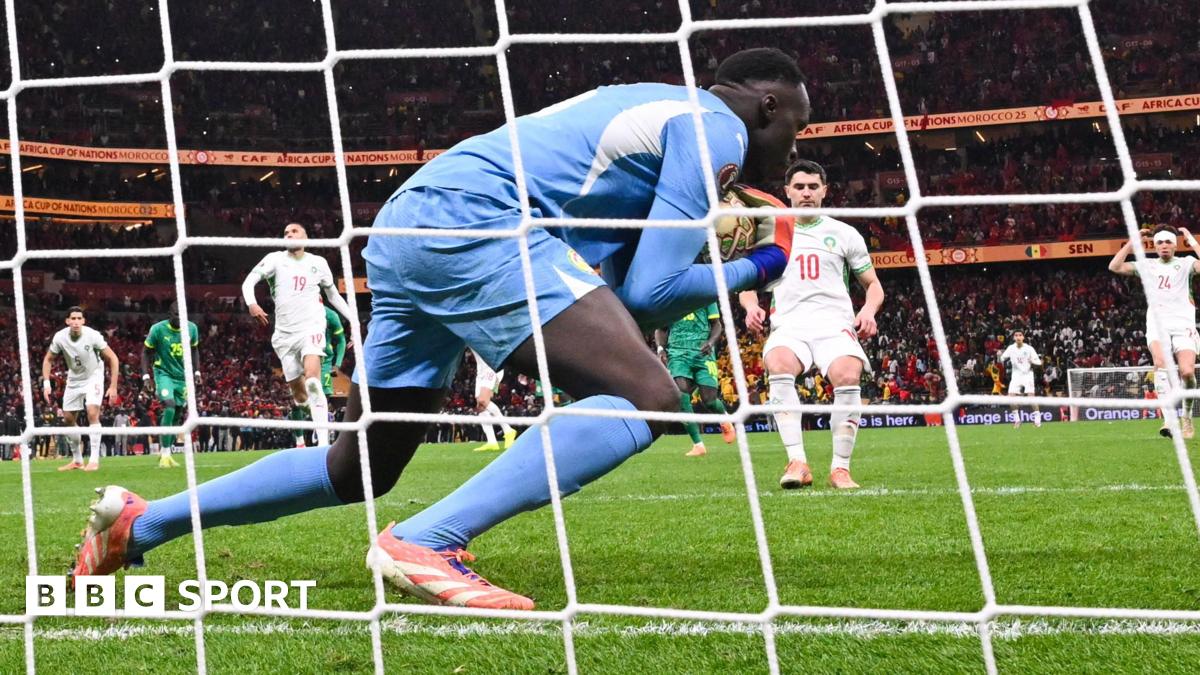
"Image source, Getty Images In a controversy-filled Africa Cup of Nations final, Brahim Diaz's attempt to bring some calm only added to the chaos. Around 17 minutes passed between Morocco being awarded a penalty, deep into stoppage time, and Diaz beginning his run-up. The Real Madrid forward slowed as he approached the ball and dinked the ball down the middle but goalkeeper Edouard Mendy didn't move, comfortably caught it and the game went to extra-time with Senegal emerging victorious."
"It was not the first time Panenka had attempted such a penalty. In fact, he had scored for his club side Bohemians against local rival Dukla Prague in the same manner just a month earlier. However, his Euros-winning effort brought the technique to a wider audience and the Panenka was born. Image source, Getty Images In the 40 years since Panenka brought the dinked penalty to prominence, it has gradually become more common."
"The Panenka takes its name from Antonin Panenka, who famously chipped his penalty down the middle to win the 1976 European Championships for Czechoslovakia. The game against reigning champions West Germany had ended 2-2 after extra-time in Yugoslavia, with a penalty shootout to decide the winner. When Uli Hoeness smashed his spot-kick over the bar, Czech midfielder Panenka had the chance to win for the underdogs."
Brahim Díaz missed a late Panenka-style penalty in the Africa Cup of Nations final by chipping the ball down the middle; Edouard Mendy comfortably caught it and the match went to extra-time, with Senegal ultimately victorious. Díaz received the Golden Boot from Fifa president Gianni Infantino and appeared distraught after the miss. Similar attempts have recently failed, such as Sunderland's Enzo le Fee, whose dinked penalty was saved by Caoimhin Kelleher. The Panenka originated with Antonin Panenka's chipped winner in the 1976 European Championship and has steadily grown more common over the past four decades.
Read at www.bbc.com
Unable to calculate read time
Collection
[
|
...
]