"When rivals put five players in attack, with two wide players, two attacking midfielders and a striker, Rosenior's sides adopt a back-five shape while defending near their goal. This can mean a five made up of three central defenders and two wing-backs, but sometimes Rosenior will create a back five by asking one of his wingers to drop in alongside the back four. At Chelsea, a winger like Pedro Neto may be asked to do this role given his work-rate."
"Higher up the pitch, Rosenior's Strasbourg tended to maintain this 5-2-3 shape, applying more intense pressure when looking to win back possession. On occasion, from a higher defensive position, the team may press from a 4-4-2 starting shape. This is usually done if the opposition build with a back four rather than a back three. Pressing in a 4-4-2 against a back four reduces the distances Rosenior's wide players have to cover to apply pressure to the opponent's full-backs."
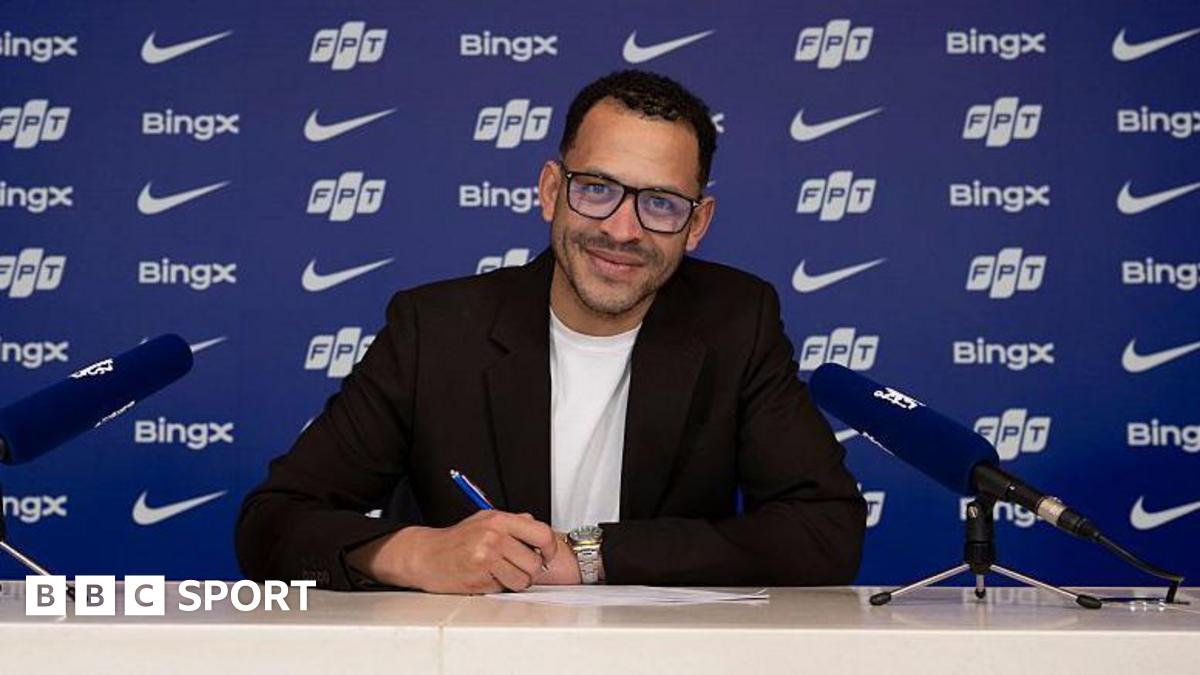
"Liam Rosenior is the fifth full-time head coach to take charge at Chelsea in five years, but what will the new boss bring to Stamford Bridge? The former Strasbourg manager has said he wants fans "to be off their seat in the first 10 minutes" of every match, but doing so with a Blues side who have gone five games without a win provides a challenge."
Liam Rosenior organizes teams to prevent opponents gaining a numerical advantage on the last line, often adopting a back-five shape when under pressure. That back five can be three central defenders plus two wing-backs or a winger dropping alongside the back four; high work-rate wide players like Pedro Neto may be used in that role. Two central midfielders and three narrow attackers protect the defense and block central progression. Higher up, Rosenior's teams maintain a 5-2-3 shape and press intensely to win possession. They sometimes press from a 4-4-2 against back fours to reduce wide players' distances. In possession, the side shifts into a 3-2-2-3 shape.
Read at www.bbc.com
Unable to calculate read time
Collection
[
|
...
]