"The structural reasons run deeper than ownership, however. European resorts, particularly in Switzerland and Austria, benefit from community-based ownership models, long-term government concessions, and a century-plus tradition of year-round alpine tourism that justifies enormous capital outlays. Many Swiss gondolas are classified as public transport infrastructure and receive direct federal subsidies. North America has a few “public” gondolas and lifts, but these are few and far between, while transport lifts like the Matterhorn Alpine Crossing are fairly common throughout Europe."
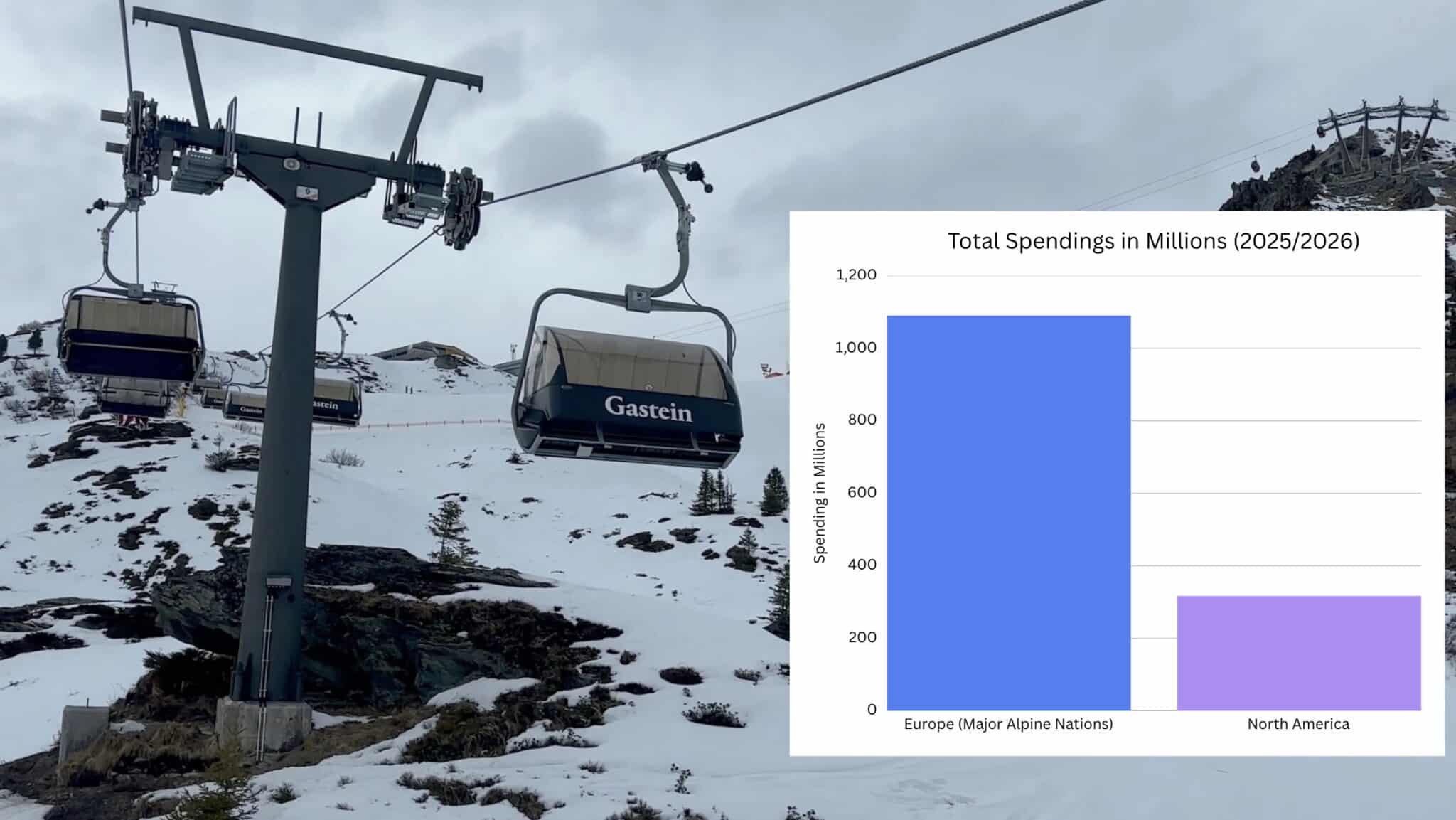
Italy, France, Austria, and Switzerland planned about $1.09 billion in new lift installations for the 2025/26 ski season, while the United States and Canada combined planned about $317 million. Europe installed 27 new 10-person gondolas and 12 new eight-seat high-speed chairs, while North America installed four gondolas and no new eight-seat high-speed chairs. North America’s most common installation was the fixed-grip quad, with 14 built, representing 28% of regional installations. Vail Resorts was identified as a major driver of the gap, returning about $595 million to shareholders in fiscal year 2025 while spending about $225 million on mountain capital expenditures. Private operators like Alterra were described as reinvesting about 20% to 25% of revenue into mountains. Structural factors include community-based ownership, long-term government concessions, year-round alpine tourism traditions, and federal subsidies for gondolas classified as public transport infrastructure. In the United States, about 60% of ski terrain is on Forest Service land under permits.
#ski-lift-infrastructure #investment-disparities #europe-vs-north-america #vail-resorts #public-transport-subsidies
Read at Unofficial Networks
Unable to calculate read time
Collection
[
|
...
]