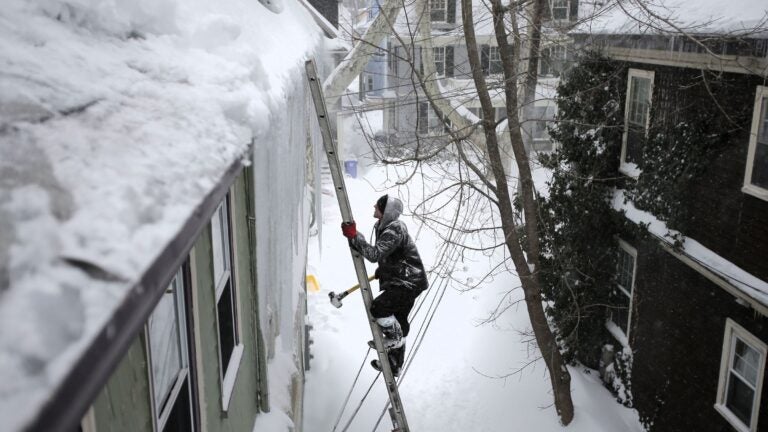
"“Snow on the roof is not a problem in itself,” said Anthony Corrao Jr., president of Precision Roofing Services of New England, located in Essex. “In fact, it acts as an insulator that protects the shingles. And, even when it's deep, the snow's weight is less than what the roof is designed to bear; the average roof is built to carry loads of 65 pounds per square foot. Even flat roofs, which seem more vulnerable to snow loads than pitched ones, are pretty tough. In fact, residential flat roofing is stronger than commercial roofs.”"
"He said that some of the worst damage to roofs is caused by wind shears. “When heavy winds change direction, they can tear shingles off and loosen the ridge caps.” He added that older roof shingles were designed to withstand winds of 80 miles per hour. “Now, they're made to handle 130 mile-per-hour winds.”"
"“Snow itself is usually not damaging to roofs; its weight is the biggest concern, and building codes usually ensure modern roofs can carry it. Even three-deckers from the early 20th century, with their flat roofs, have proven able to handle New England's snows.”"
"Water seepage, the problem that produces ice dams, can be addressed with better technology. “Fifty percent of roofs"
Snow on a roof is generally not damaging by itself because it insulates shingles and its weight is usually within design limits set by building codes. Roofs are engineered to carry typical snow loads, including flat residential roofs that are often stronger than commercial flat roofs. The most common roof damage comes from wind, especially when wind direction changes and tears shingles off or loosens ridge caps. Older shingles were designed for lower wind speeds, while newer materials handle higher speeds. Ice dams form when water seeps under roofing and refreezes, but improved technology can reduce seepage and related problems.
Read at Boston.com
Unable to calculate read time
Collection
[
|
...
]