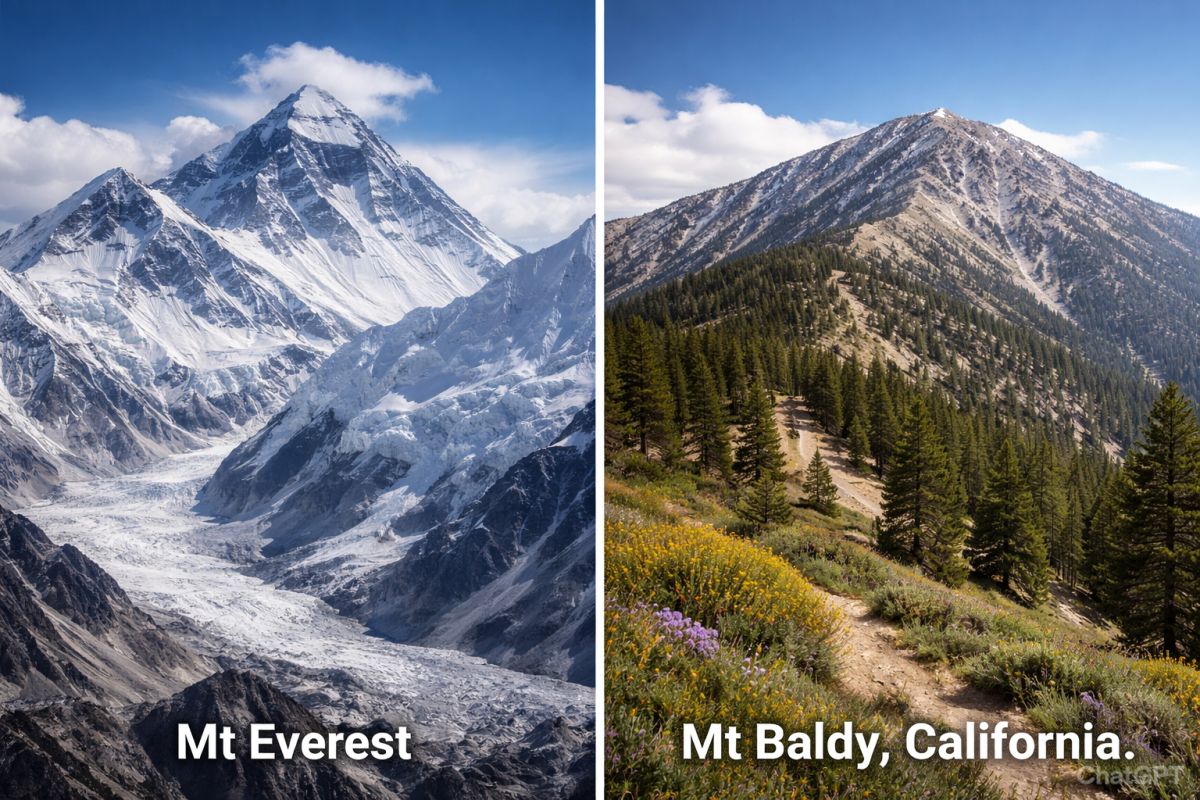
"Between 2016 and 2025, Mt Baldy saw 345 search-and-rescue operations and 23 deaths. The stark comparison came directly after Mt Baldy claimed the lives of 3 people in a single day in December of 2023. While Everest has recently been plagued by overcrowding, with some photos of lines to the top making national headlines, it sees far fewer climbers then Mt Baldy."
"While that elevation difference would suggest a lower death rate, Mt Baldy's accessibility makes it a hot spot for climbing related accidents. The changing weather conditions at the top of the 4,000 foot peak can spell disaster for the underprepared hiker."
"In 2019, severe overcrowding and a narrow weather window caused a bottle neck at the famed Hilary step, the famed final obstacle and most technical piece of climbing on the classic Everest summit route. 11 people died as a result of being left out to exposure, running out of oxygen, and other climbing relate"
Mt. Baldy, a 4,193-foot peak near Los Angeles, experiences a disproportionately high death rate compared to Mt. Everest despite its significantly lower elevation. Between 2016 and 2025, Mt. Baldy recorded 345 search-and-rescue operations and 23 deaths, while Mt. Everest saw 64 deaths with far fewer climbers attempting the summit. Mt. Baldy's accessibility makes it a dangerous destination for underprepared hikers who underestimate rapidly changing weather conditions. December 2025 proved particularly deadly when three hikers died, including one who fell over 500 feet in icy conditions. Both mountains face distinct challenges: Mt. Baldy's unpredictable weather and accessibility versus Mt. Everest's overcrowding and technical difficulty.
Read at SnowBrains
Unable to calculate read time
Collection
[
|
...
]