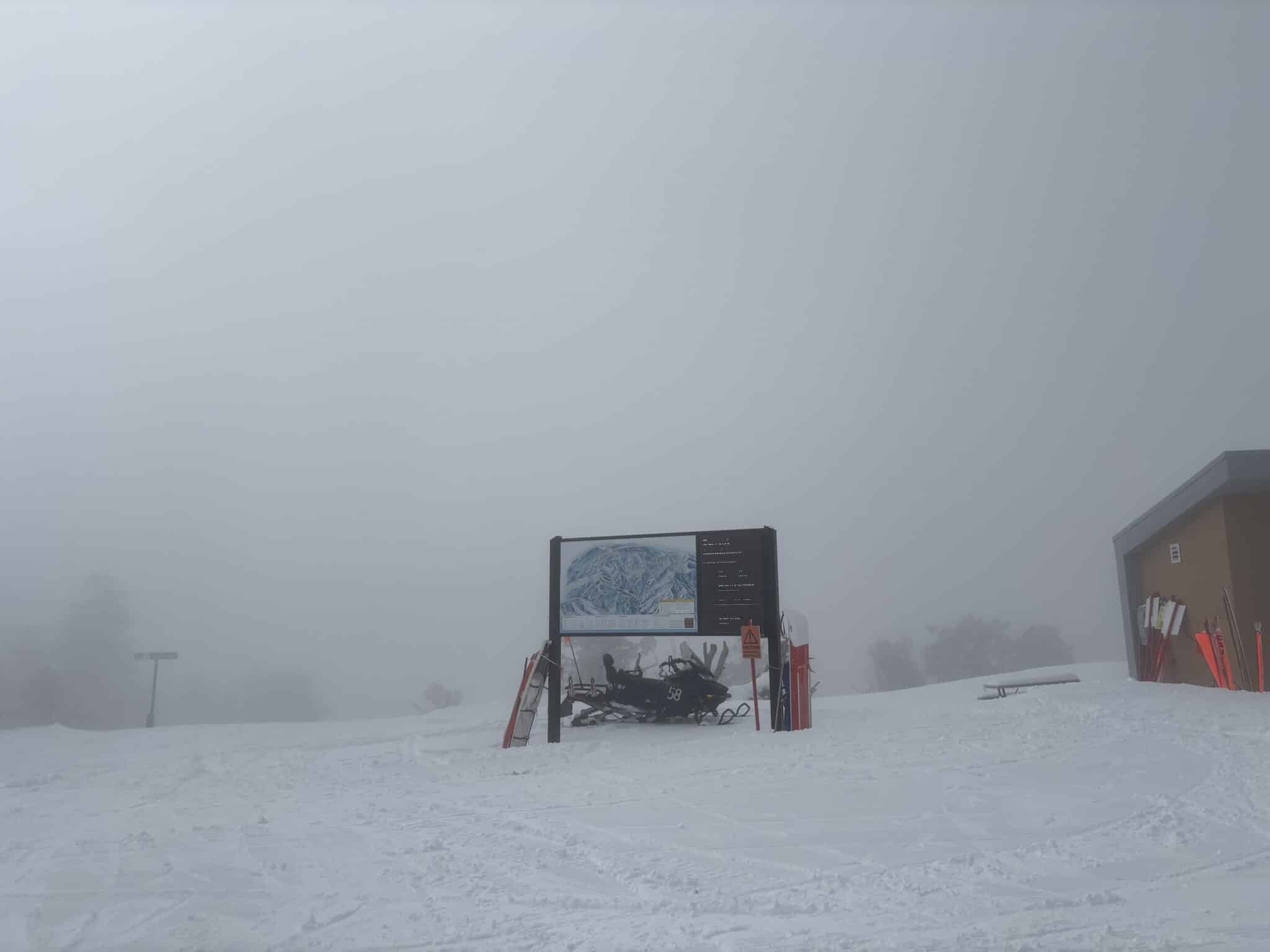
"The most comforting aspect to skiing in an inversion or super low-light is being in a group of people and sticking with them. Being able to orient yourself through the movements of the people in front of you can incredibly helpful, you can gauge snow conditions and depth much better by watching others."
"Beyond signs, skiing in trees is about the best way to spend a day skiing in bad vision. For those that don't feel confident enough to ski the trees, hugging the tree-line of any run can be almost as helpful. The trees provide opportunities for depth and slope that typical runs can't."
"Skiing slow and cautious is essential on days like this, it can also be helpful to look down and watch your skis move too. This way you can be sure you are still moving while the views in front of you may not be."
Skiing during inversions or low-light conditions presents challenges but can be improved through several strategies. Staying with a group provides orientation and helps gauge snow conditions through observing others' movements. Signage serves as helpful reference points. Tree skiing offers superior depth perception compared to open runs, while hugging tree-lines provides similar benefits for less confident skiers. Maintaining slow, cautious speeds and watching your skis ensures continued movement awareness when visibility is poor. Despite the skiing difficulties, low-visibility weather phenomena like inversions offer unique atmospheric experiences worth appreciating.
Read at Unofficial Networks
Unable to calculate read time
Collection
[
|
...
]