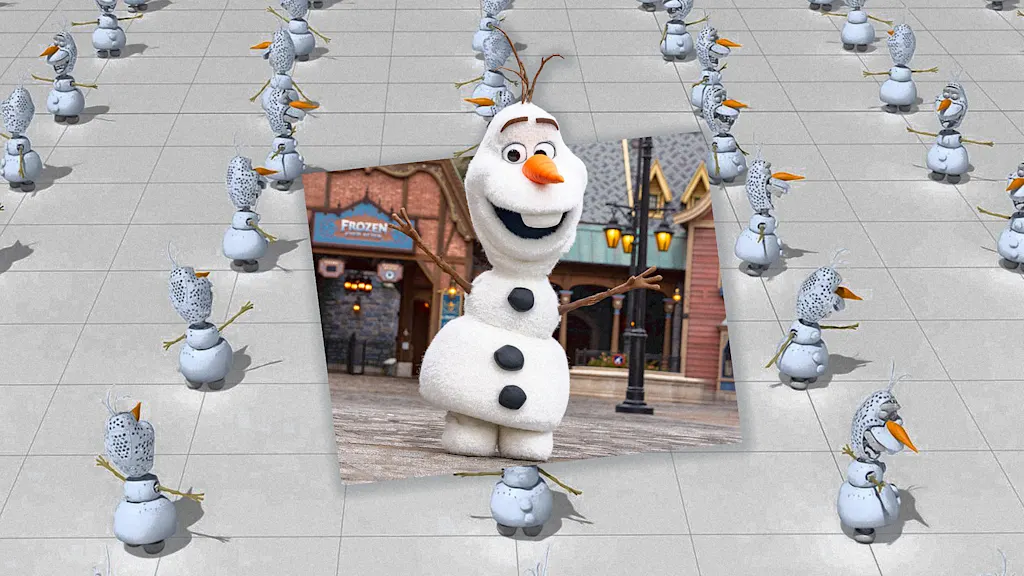
"This isn't just about replicating the animation; it's about emulating the creators' intent. To bridge the gap between a CGI snowman and reality, the team had to invent new technologies in the field of legged robotics—cramming a bizarre skeleton into an incredibly tight space—and rely on deep reinforcement learning so the machine didn't face-plant or literally melt its own hardware."
"Olaf is a physical anomaly: He has a massive, heavy head perched on a remarkably slim neck, with two floating snowballs for feet and arms as thin as literal tree branches. This introduced equilibrium, mechanical, and thermal problems that the team had to solve."
Walt Disney Imagineering developed a 34.9-inch-tall, 32.8-pound robotic version of Olaf for the World of Frozen at Disneyland Paris, opening March 29, 2026. The project presented unprecedented engineering challenges due to Olaf's unusual anatomy: a heavy head on a slim neck, floating snowball feet, and thin branch-like arms that violate standard bipedal weight distribution principles. Engineers had to solve equilibrium, mechanical, and thermal problems while capturing the character's animated essence through realistic motion. The team invented new legged robotics technologies and employed deep reinforcement learning to prevent mechanical failure. The robot features iridescent fibers mimicking snow's shimmer and includes a detachable carrot nose for guest interaction.
#robotics-engineering #disney-imagineering #character-animation-technology #legged-robotics #theme-park-innovation
Read at Fast Company
Unable to calculate read time
Collection
[
|
...
]