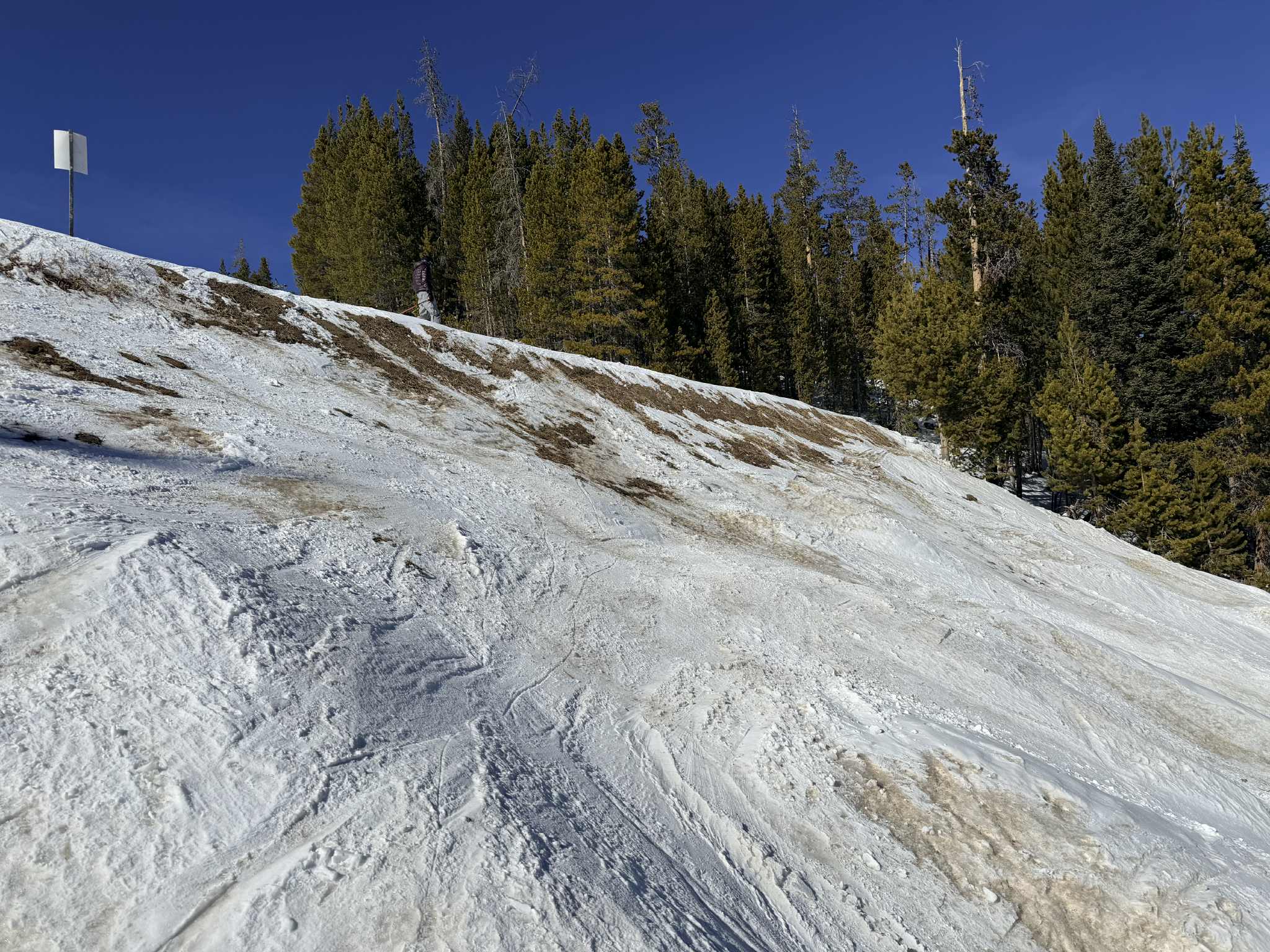
Colorado ski resorts face severe snow shortages despite February storms bringing significant precipitation to other western states. As of February 25, Colorado's snowpack sits at only 63% of average, forcing skiers to navigate exposed terrain throughout the season. A late February storm delivered rain rather than snow even at high elevations above 9,000 feet, with only wet snow accumulating afterward. Meteorologists confirm that reaching average snowpack would require unprecedented snowfall between now and mid-April—essentially the most snow in 30 years. Recovery would necessitate a once-in-100-year March storm cycle, making normal snowpack levels extremely unlikely for the remainder of the season.
"To get back to average snowpack, we essentially need to have the most snow that we've ever had for the last 30 years between now and mid-April. It would be extremely difficult for Colorado to get back to a normal/average snowpack. As an example, when looking at the Independence Pass SNOTEL site in central Colorado outside of Aspen, we typically have 13 inches of snow-water-equivalent at the end of February. This year, we only have 6.7 inches of SWE."
"Looking back at the past 30 years, the only year that we gained over 7 inches in SWE from February to March was in 2019 during a historic storm cycle. We typically add 2.8 inches of SWE in March, so adding 6 to 7 inches would require another historic, once every 100-year storm cycle."
#colorado-snowpack-deficit #ski-season-conditions #winter-precipitation-patterns #climate-and-weather-impacts
Read at SnowBrains
Unable to calculate read time
Collection
[
|
...
]