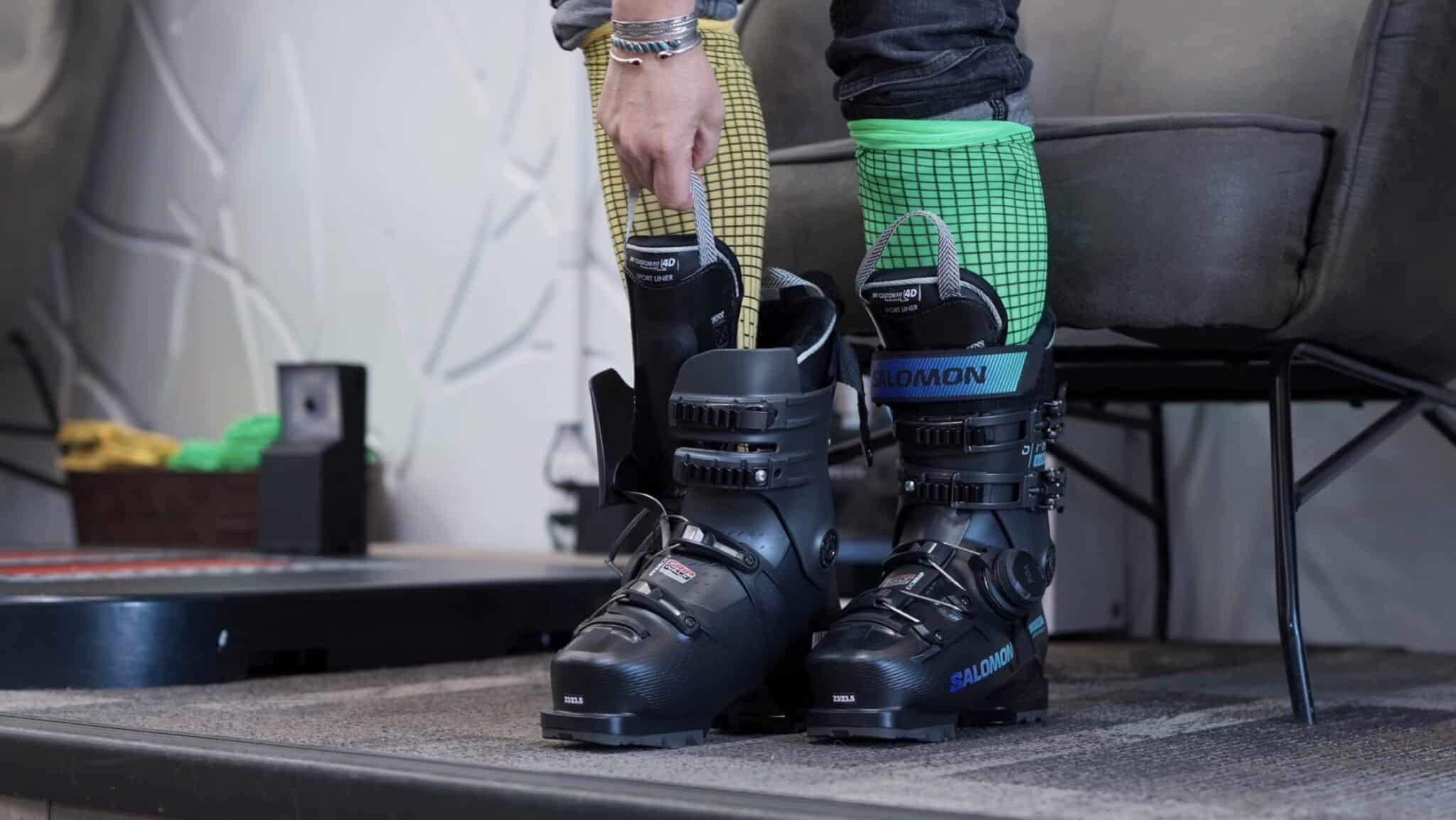
"There's an optimal fit for everyone.No foot or person is the same, and the right ski boot depends on height, weight, ability, skiing goal, pain tolerance, and more. You should by the stiffest boot possible.Stiff doesn't mean skill, and flex should match the individual. Body size, ankle flexibility, agility, skiing style, personal preference, and more are all considered when choosing flex."
"Footbeds are a luxury, not a necessity.A footbed stabilizes the foot, controls pronation, prevents excess movement, improves comfort and circulation, extends boot lift, and much more. They should be considered a necessity in your boot fitting process, not an added luxury. Every boot fitter is the same.Some boot fitters have varied experiences, preferences, and different beliefs in pain tolerance. Perform a shell fit and discuss custom insoles. If they skip any of these steps, the fit might be unreliable."
Optimal ski-boot fit varies by individual and depends on foot shape, height, weight, ability, skiing goals, and pain tolerance. Boot flex should match body size, ankle flexibility, agility, skiing style, and personal preference; stiffer is not always better. Footbeds stabilize the foot, control pronation, prevent excess movement, improve comfort and circulation, and extend boot life, making them essential to proper fit. Boot fitters vary in experience and approach; a reliable fitting includes a shell fit and discussion of custom insoles. Trying many boots without expert guidance can cause confusion; trust a knowledgeable fitter for accurate, comfortable results.
Read at Unofficial Networks
Unable to calculate read time
Collection
[
|
...
]