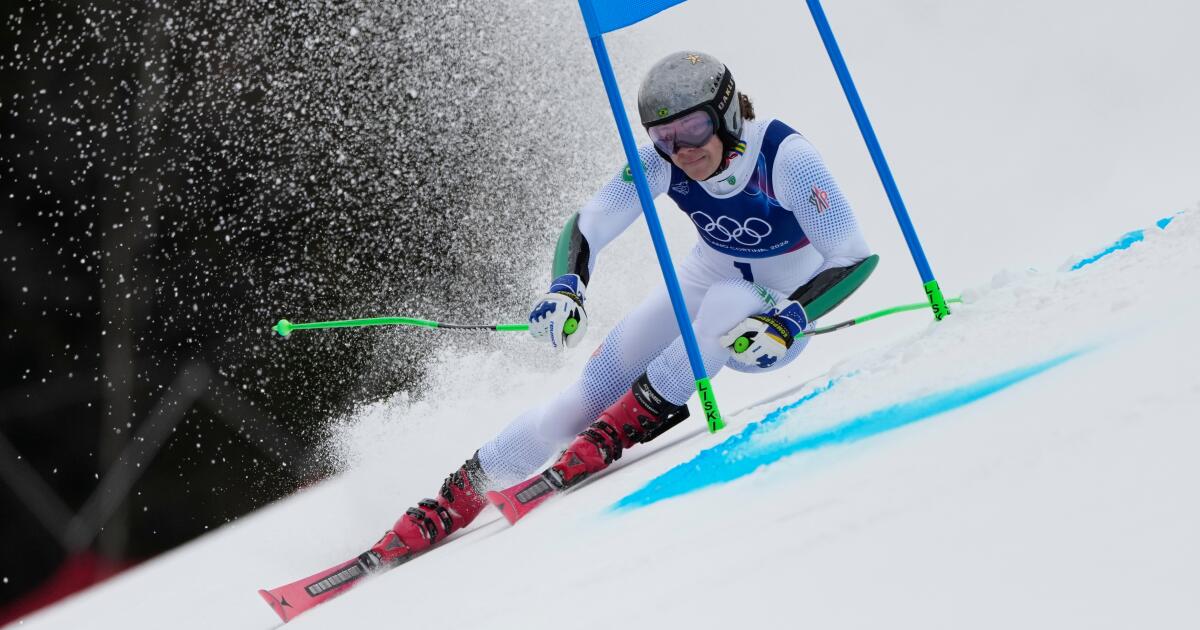
"Those blue dye lines were introduced in 2001 on the World Cup tour to help racers - particularly in the speed events of downhill and super-G - navigate courses at high speed, especially in poor visibility. The skier has no obligation to stay within the blue borders, but the markings help them determine the best line down the hill."
"Those poles that delineate the course - not just in slalom but all races - are called "gates," and they are hinged at the base so they can bend down completely when hit by a racer and then snap back into a vertical position. They are typically screwed or hammered into the snow and often cemented in by water that turns to ice."
Blue dye lines on speed courses improve visibility and help racers identify optimal lines at high speeds, especially in poor light, though fresh dye can slightly affect ski speed. Gates are hinged poles that bend when struck and then snap back; they are anchored in the snow and often reinforced with water-to-ice to stay secure. Racers aim for the shortest, most direct route, and slalom athletes intentionally hit gates to maintain that line. Protective equipment such as freezing cold speed suits, sleek airbags, and cut-resistant underwear reduces injury risk during high-speed competition.
Read at Los Angeles Times
Unable to calculate read time
Collection
[
|
...
]