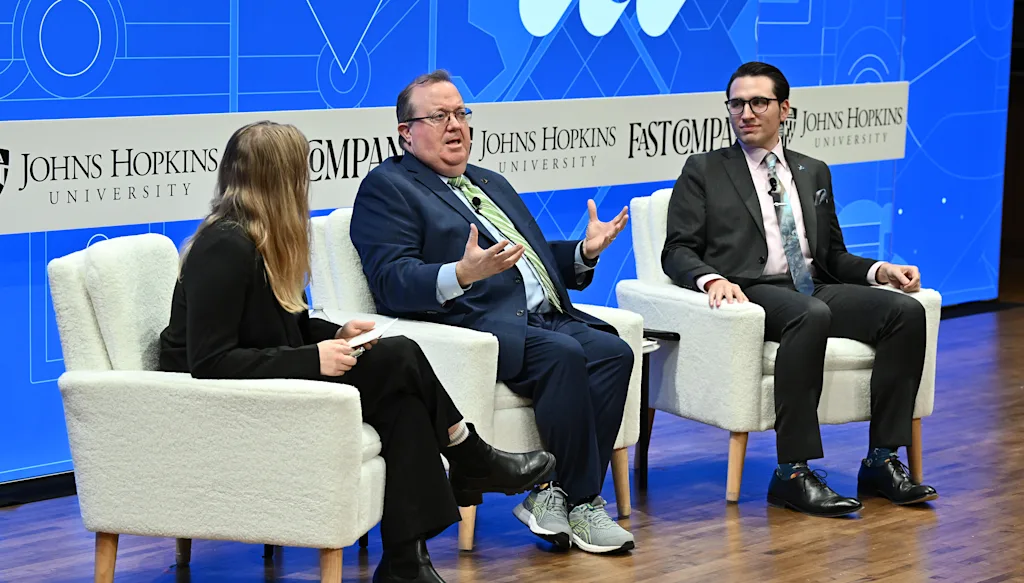
""What we discover in space invariably helps life on Earth," Kilray said at last month's World Changing Ideas Summit, cohosted by Fast Company and Johns Hopkins University in Washington, D.C. "These investments in fundamental research-although maybe you don't see those direct comparisons to your life immediately-have these knock-on effects for decades after you make that initial discovery and revolutionize the economy, national security, and just our fundamental understanding of the cosmos.""
""And space has evolved to become a critical infrastructure, said Rich Cooper, vice president of strategic communications for the Space Foundation, a nonprofit advocating for space education and exploration. More than 90 countries now have active space operations, and hundreds of companies are operating business interests in space-which is why policy efforts must focus on balancing the needs of these various interests, he added. In space, one of the biggest policy challenges right now is managing all of the traffic.""
Policy changes enabling low-Earth-orbit satellites in the 1990s created technologies like Wi-Fi, commercial imagery, and enhanced national security. Discoveries and investments in space science produce long-term knock-on effects that can transform economies, defense capabilities, and understanding of the cosmos. Space now functions as critical infrastructure with more than 90 countries and hundreds of companies conducting operations and commercial activities, creating competing needs for access and regulation. Major policy challenges include managing orbital traffic, carefully allocating satellite placements to avoid interference, and implementing debris-mitigation plans to prevent further creation of orbital litter.
Read at Fast Company
Unable to calculate read time
Collection
[
|
...
]