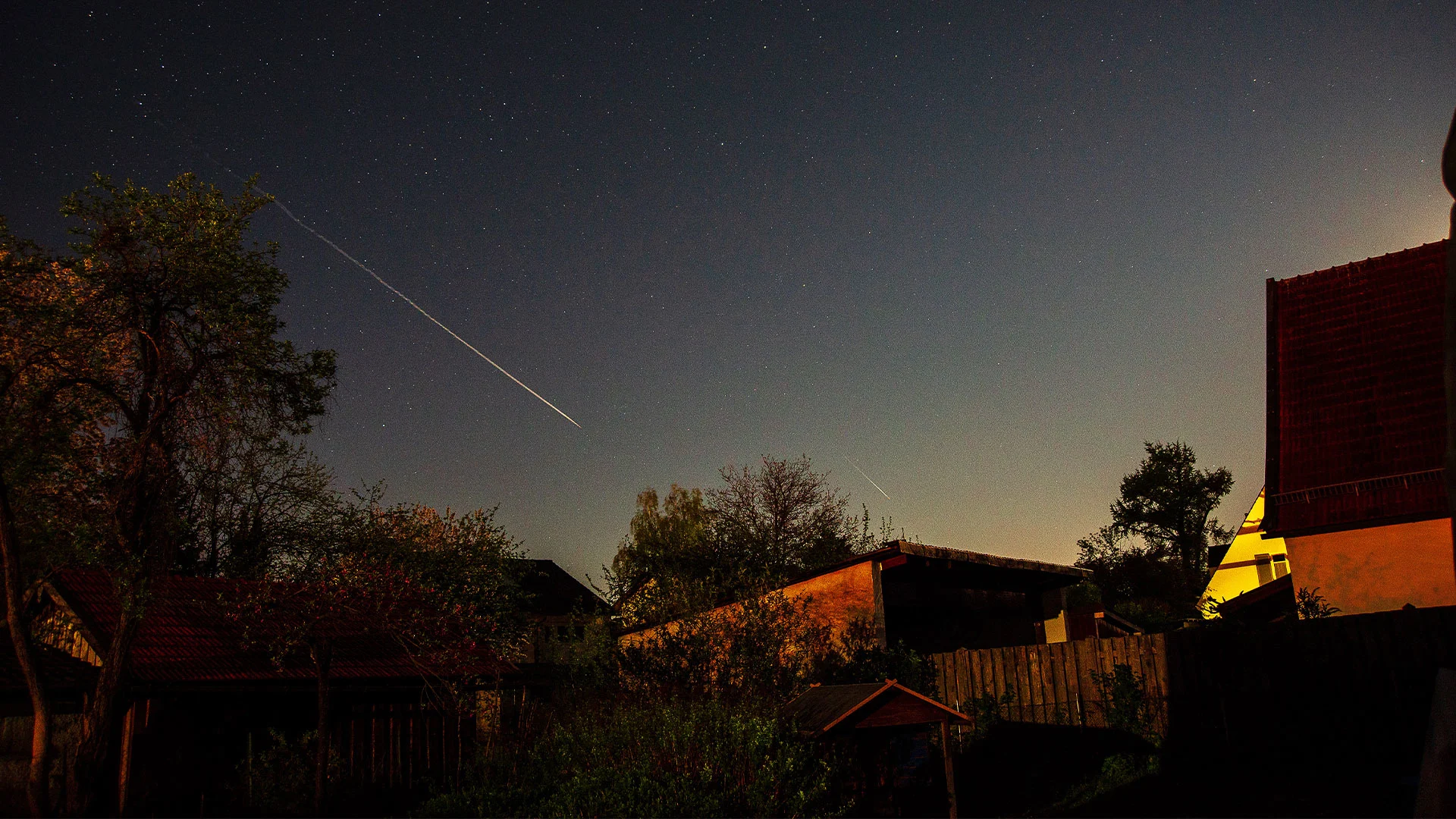
"The Lyrid shower is among the oldest recorded meteor showers, dating back as far as 2,700 years. The meteor shower is visible when Earth travels through the path of Comet Thatcher, rendering a trail of the comet's remnants visible to skywatchers."
"When comets come around the sun, the dust they emit gradually spreads into a dusty trail around their orbits. Every year the Earth passes through these debris trails, which allows the bits to collide with our atmosphere where they disintegrate to create fiery and colorful streaks in the sky."
"Meteors will appear to be coming from Vega, one of the brightest stars in the Lyra constellation. According to experts, it's best to look slightly away from the radiant point to spot some of the meteors with the longest tails."
The Lyrid meteor shower peaks on Tuesday evening and predawn Wednesday, producing an average of 10 to 20 meteors per hour. Rare outbursts can yield up to 100 meteors. Primarily visible in the Northern Hemisphere, the shower is among the oldest, dating back 2,700 years, as Earth passes through Comet Thatcher's debris. Meteors appear to originate from Vega in the Lyra constellation. Stargazers should look east after 10 pm starting April 21, moving away from city lights for optimal viewing.
Read at Fast Company
Unable to calculate read time
Collection
[
|
...
]