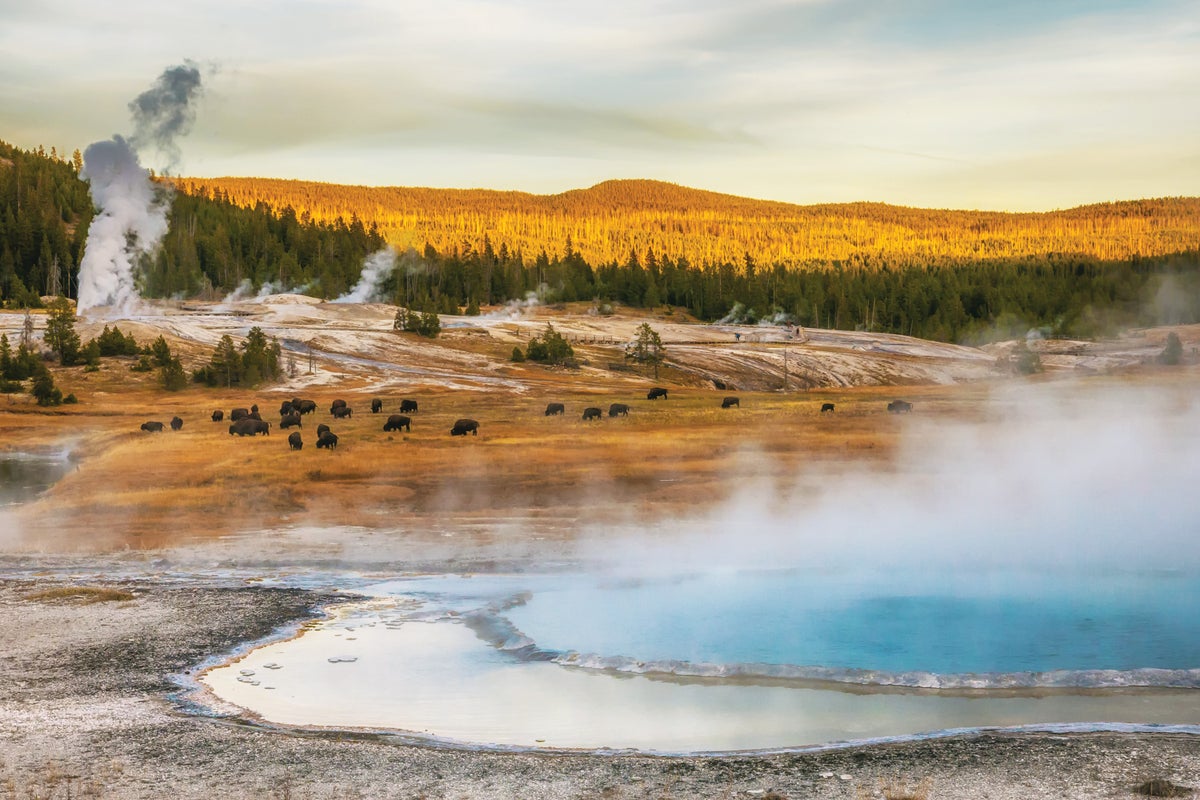
"For a study in PNAS Nexus, researchers tracked the effects of such shake-ups on microbes at the bottom of a 100-meter-deep borehole in Yellowstone National Park. The scientists made a 10-hour round-trip trek to and from the test site seven times over seven months. There they collected samples of rock, dissolved gas and microbes, overcoming equipment malfunctions, logistical difficulties, and more along the way."
"Yellowstone endures a lot of earthquakes, but swarms this powerful tend to occur every five to 10 years, says Montana State University geomicrobiologist Eric Boyd, the study's lead author. During the swarm, the amount of microbial life present increased by 6.5 times before dropping back to normal after the tremors subsided. Hydrogen levels also increased, and the types of microbes observed changed. All the pieces fit together nicely, Boyd says. We put all of these data together, and we're like, holy cow!"
"With some luck, specialized equipment, a supervolcano and a narrow hole 30 stories deep, researchers demonstrated that earthquakes shake up more than just rocksthey also boost microbe populations living underground. Up to 30 percent of life on Earth doesn't ever see sunlight; instead these organisms get energy by chowing down on hydrogen generated through chemical interactions between water and rocks. Earthquakes fracture rocks, creating fresh reaction surfaces and shifting the pathways water travels along, which increase hydrogen production."
Earthquake-induced fracturing of subsurface rock creates new reaction surfaces and redirects water flow, increasing abiotic hydrogen generation. Hydrogen serves as an energy source for microbes that live without sunlight, supporting a significant fraction of Earth's subsurface biosphere. Repeated sampling from a 100-meter borehole in Yellowstone captured a rare swarm of 2,182 earthquakes and showed a 6.5-fold increase in microbial abundance concurrent with rising hydrogen levels and altered community composition. Microbial populations largely returned to baseline after the tremors subsided. Episodic tectonic events can therefore drive transient boosts in deep microbial life and inform searches for life in similar extraterrestrial environments.
Read at www.scientificamerican.com
Unable to calculate read time
Collection
[
|
...
]