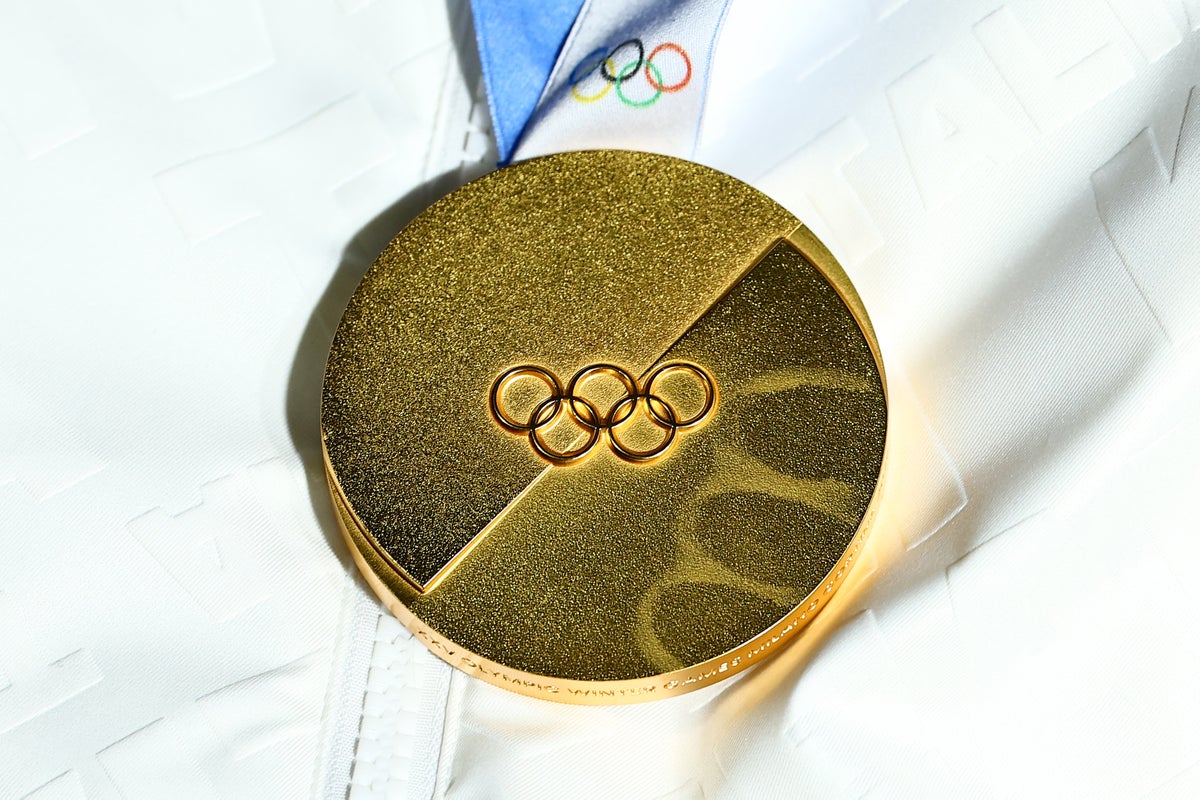
Breezy Johnson's Winter Olympic gold medal broke when its ribbon attachment snapped as she jumped, and similar failures affected Alysa Liu and Justus Strelow, with medals dangling or falling on live television. Organizing officials had previously assured that the medals would not deteriorate. The medals were produced by Italy's state mint from recycled metals melted in renewable-energy furnaces, intended to contrast with Paris 2024 medals that developed a crocodile-skin texture. An investigation with the mint led to an announced but unspecified fix. The medals have an asymmetric two-part design representing Milan and Cortina, and weigh about 500 grams; IOC rules make gold medals mostly silver.
"Breezy Johnson had just won gold for the U.S. in downhill skiing. Moments after it went around her neck, she jumped up and downand it broke. The ribbon attachment snapped clean. She wasn't alone. A video of U.S. figure skater Alysa Liu's medal dangling ribbonless made the rounds on social media. German biathlete Justus Strelow watched his bronze clatter to the floor mid-victory-dance on live television."
"What made this particularly awkward was something Giovanni Malago, president of the organizing committee for this year's Winter Olympics, had said at the medal unveiling ceremony in Venice last July: I can assure you they won't deteriorate. The medals were produced by Italy's own state mint from recycled metals melted in renewable-energy furnacesa pointed contrast to the 2024 Summer Olympic medals, in Paris, which had developed what some athletes described as a crocodile-skin texture within weeks of the podium. Italy's would be different."
"To understand what happened, it helps to talk nerdy metallurgy. The medals feature an asymmetric design with two partsone smooth, one texturedthat are meant to fit together to represent the city of Milan and the town of Cortina d'Ampezzo, respectively urban and alpine. It's the whole aesthetic concept of the Games compressed into about 500 grams of recycled metal. Per International Olympic Committee rules, gold medals are mostly silverat"
Read at www.scientificamerican.com
Unable to calculate read time
Collection
[
|
...
]