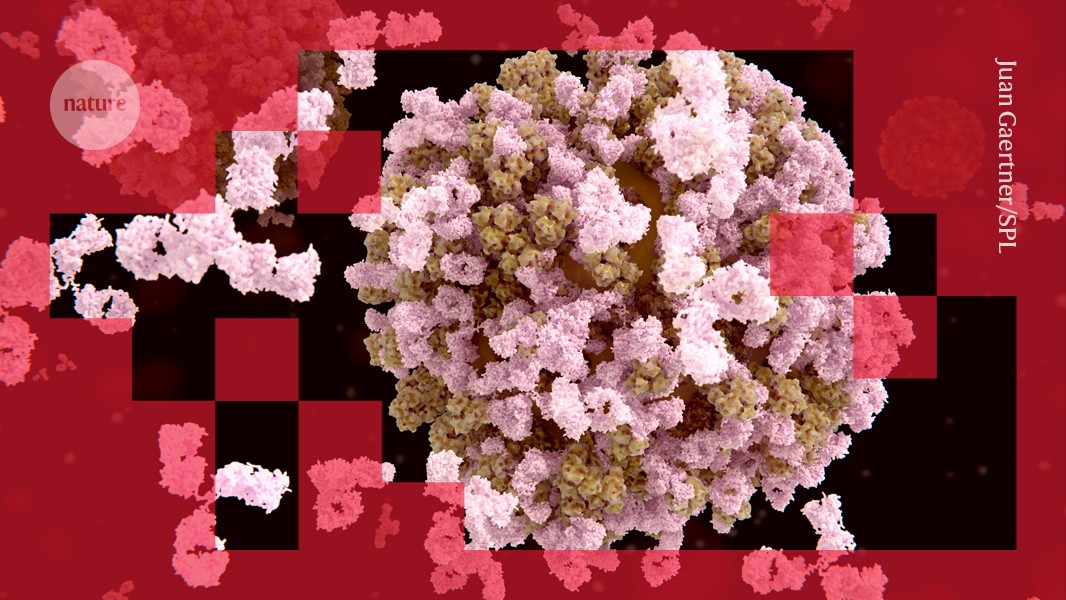
"Biologists achieved a landmark in protein design last year: using artificial intelligence (AI) to draw up entirely new antibody molecules. Yet the proof-of-principle designs lacked the potency and other key features of commercial antibody drugs that rack up tens of billions in annual sales. After a year of progress, scientists say they are on the cusp of turning AI-designed antibodies into potential therapies. In recent weeks, numerous teams have reported successfully using proprietary commercial AI tools and open-source models to make antibodies that have properties of antibody drugs."
""These latest efforts are remarkably powerful advances that enable a democratization of antibody engineering," says Chang Liu, a synthetic biologist at University of California, Irvine. The latest wave of success with de novo antibody design "will have a big impact on how quickly and how many de novo therapeutics we will see in clinical trials", adds Timothy Jenkins, a protein engineer at the Technical University of Denmark in Kongens Lyngby. Therapeutic antibodies are usually made by screening vast numbers of diverse antibodies to find ones that can recognize a certain target. But sometimes, these screens turn up only antibodies that bind weakly to the target or recognize the wrong region on it. "There isn't much precision," says Surge Biswas, chief executive of antibody-design company Nabla Bio in Cambridge, Massachusetts. Instead, scientists hope to specify an antibody's desired target - the active site of an enzyme implicated in disease, for instance - and have an AI model suggest designs. "The promise of AI-guided design is that you can be atomically precise," Biswas adds."
AI methods produced entirely new antibody molecules but initial designs lacked potency and other drug-like features. Over the following year, multiple teams using proprietary and open-source models generated antibodies with properties resembling therapeutic antibodies, bringing AI-designed antibodies closer to potential therapies. The advances promise atomic precision in targeting specific molecular sites and could broaden access to antibody engineering. Experts foresee faster and more numerous de novo therapeutics entering clinical trials. Traditional antibody discovery depends on screening vast, diverse libraries, which can yield weak binders or antibodies that recognize incorrect regions, limiting precision.
Read at Nature
Unable to calculate read time
Collection
[
|
...
]